 English
 Español
 Français
 עברית
 Português


A servidumbre easement Costa Rica is a legal right that lets someone else use part of your land, cross it, or run infrastructure through it, even after you own it outright. These rights travel with the property, not the person who granted them, which means you inherit them the moment you close. They show up in all kinds of situations: a neighbor who has the only access road crossing your lot, a power company with a utility corridor, or a municipal water line buried under what you thought was buildable land. Missing an easement before you buy is one of the most common and costly surprises I see for North American buyers in Costa Rica. The good news is that registered easements are public record and, with the right tools, you can find them before you commit a single dollar.
- Servidumbres (easements) are permanent land rights that bind every future owner, not just the person who created them.
- Some easements are registered at the Registro Nacional and appear on a title search; others are legal-by-operation-of-law and exist even without registration.
- Always check the title and the plano catastrado (the official cadastral survey) before making an offer.
- A Costa Rican real estate attorney, combined with a proper title report, is your best protection.
What Is a Servidumbre (Easement) Under Costa Rican Law?
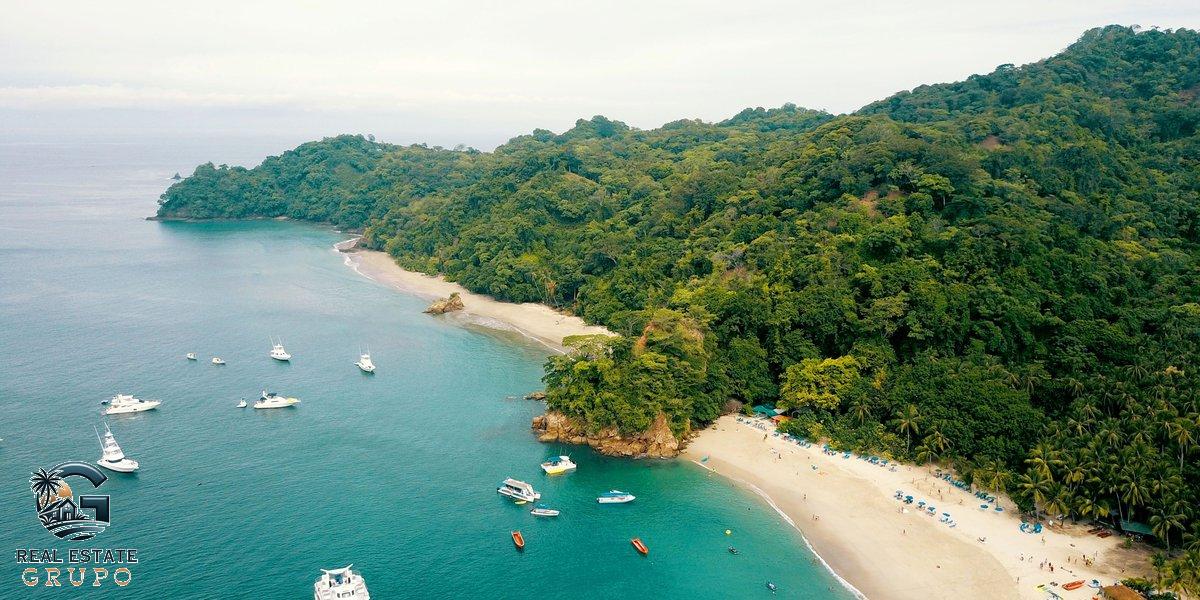
Costa Rican civil law defines a servidumbre as an encumbrance placed on one piece of land (the “predio sirviente,” or servient estate) for the benefit of another piece of land or a third party (the “predio dominante,” or dominant estate). Think of it as a permanent duty your land owes. It does not disappear when the property sells.
The most common types buyers encounter are servidumbres de paso (right-of-way or access easements), servidumbres de acueducto (water-pipe easements), and servidumbres de línea eléctrica (power-line easements). There are also legal servidumbres that exist automatically by law, like the public-access strip along rivers and streams, without any registry entry at all.
Why Easements Surprise So Many Buyers in Costa Rica
The mistake I see most: a buyer falls in love with a parcel in Guanacaste or the Southern Zone, signs a sale agreement, and only discovers at closing, or worse, after closing, that a neighbor has a formal right-of-way cutting straight through the middle of their future vacation home site. In some cases that corridor is two meters wide. In others, it’s wide enough to make the building footprint useless.
Part of the problem is that Costa Rica’s property rights system mixes registered and unregistered encumbrances. A voluntary easement agreed between two neighbors and properly notarized will be recorded in the Registro Nacional and show up on a title search. A legal easement that arises by operation of law (riparian zones, public roads, drainage channels) may never appear in the registry at all. You need eyes on both.
How Do You Find Servidumbre Easements on a Costa Rica Property?
Start with the finca number. Every titled property in Costa Rica has a finca number, a unique registry ID, and that’s your entry point into the Registro Nacional system. A title search on that finca will show you registered mortgages (hipotecas), liens (gravámenes), and any voluntarily recorded easements attached to the property.
The fastest way to run a property check is through Folio, which pulls official Costa Rica registry data, including the finca, plano catastrado, and any maritime-zone status, into a single readable report in minutes. That gives you a clear starting point before you even talk to an attorney. Think of it as the pre-diligence step that tells you whether deeper diligence is needed.
After you have the registry picture, your attorney should physically review the plano catastrado for any easement corridors drawn on the survey. Then, especially for rural or coastal land, walk the property with someone who knows the local history. Oral-use patterns sometimes predate formal registration and could still be enforceable under Costa Rican law.
What Types of Easements Are Most Common in Each Region?
The type of easement you’re most likely to encounter depends heavily on where you’re buying. Here’s a general breakdown by region and easement type:
| Region | Common Easement Types | Key Watch Point |
|---|---|---|
| Guanacaste coast (Tamarindo, Nosara, Samara) | Public beach access, maritime-zone concession limits, utility corridors | Zona Maritimo Terrestre (ZMT) rules override title in the first 200m from the high-tide line |
| Central Valley (Escazu, Santa Ana, Atenas) | Shared driveway access (servidumbre de paso), drainage easements | Older subdivisions often have informal shared-access arrangements not formally registered |
| Southern Zone (Uvita, Dominical, Ojochal) | River-buffer zones, right-of-way across neighboring farms | Agricultural parcels may have water-pipe easements serving upstream neighbors |
| Caribbean (Puerto Viejo, Cahuita) | Informal access paths, indigenous territory adjacency issues | Title clarity is more complex here; extra diligence is essential |
Can You Remove or Modify a Servidumbre Easement in Costa Rica?
Yes, but it depends entirely on the type. A voluntary easement that both parties agreed to can in principle be modified or extinguished by mutual agreement, notarized, and recorded at the Registro Nacional. Legal easements that exist by operation of law, like river buffer zones or public beach access, cannot be negotiated away. They are there regardless of what any contract says.
Extinguishing a registered easement requires a notarial deed (escritura), the consent of the dominant-estate owner, and proper registration. Your attorney handles that process. Budget time and legal fees. It is not a weekend task.
If a seller tells you an easement “doesn’t really matter” or “we’ve never used it,” treat that as a reason to dig deeper, not less. The neighbor who holds the benefit of that easement may feel very differently, especially if you start building.
How Does This Affect Property Value and Your Build Plans?
A right-of-way cutting through a lot can directly limit where you place a house, a pool, or a guesthouse. Some easement corridors have minimum-clearance rules that push structures back several meters. That matters a lot on a smaller or oddly shaped parcel.
On the flip side, a property that benefits from an easement (the dominant estate) may have secured legal access to a road or water source that it would otherwise lack. That can actually add value. The key is knowing which side of the equation you’re on before you negotiate the price.
If you’re buying for rental income, check whether any easement affects the buildable footprint or the ability to add guest units. Use the rental ROI calculator to model returns against your actual buildable area, not just the total lot size. A five-acre parcel with a large easement corridor may deliver the returns of a two-acre parcel.
What Should You Ask Your Attorney to Check?
Your Costa Rica real estate attorney should review: the full registry entry for the finca (to catch recorded easements, liens, and ownership history); the plano catastrado on file with the Catastro Nacional (to see if any corridors are drawn on the survey); the use-zone classification with the municipality (which can impose additional setbacks on top of any private easements); and any relevant environmental restrictions through SETENA if the land is in or near a protected area.
If it’s coastal property, your attorney also needs to confirm the property’s status under the Zona Maritimo Terrestre (ZMT) law. Concession land in the ZMT is not titled the same way as inland property and carries its own access, use, and transfer rules. That’s a whole separate category of encumbrance. See our current listings for properties where we’ve already done preliminary diligence notes so you know what you’re looking at from day one.
Closing Cost Considerations When Easements Are Involved
If you negotiate a price reduction because of an easement, or if the seller agrees to extinguish one before closing, that changes the timeline and the cost structure. Attorney fees, registry fees, and transfer taxes are all calculated on the declared value of the property. Use our closing cost calculator to get a real estimate before you finalize your offer, so there are no surprises at the notary’s office.
Frequently Asked Questions
Do easements in Costa Rica have to be registered to be legally valid?
No. Some easements are created by operation of law, meaning they exist automatically without any registry entry. River-buffer zones and public beach-access strips are examples. Voluntary easements between private parties should be registered to be fully enforceable against third parties, but legal easements bind everyone regardless of whether they appear in the Registro Nacional.
How do I find the finca number for a property I want to buy?
The seller or their attorney should provide it. You can also often find it on the plano catastrado or on previous sale documents. Once you have the finca number, you can look up the property in the Registro Nacional system or use a service like Folio to pull a clean report quickly.
Can a neighbor claim an easement over my Costa Rica property even if it’s not registered?
Potentially yes, especially if there has been long-standing, open, and continuous use of an access path or water source across your land. Costa Rican civil law recognizes the concept of established use rights in certain conditions. This is exactly why walking the property and talking to neighbors before closing matters as much as the paper search.
What is the difference between a servidumbre de paso and a right of way on a public road?
A servidumbre de paso is a private easement across someone else’s titled land, granting access to a third party or neighboring property. A public road right-of-way is a government-designated corridor that belongs to the state and is administered by the municipality or MOPT (the public works ministry). Both can restrict what you build, but they are governed by completely different legal frameworks.
Should I walk away if a property has a servidumbre?
Not automatically. The right question is whether the easement affects your specific plans for the property. A utility easement along the back fence of a beachfront lot may be irrelevant to your build. An access easement crossing the center of a small lot where you planned a main house is a serious problem. Understand the location, width, and nature of the easement, then decide. A good attorney and a proper title report give you the facts to make that call.
Before you wire a deposit, check the property first. Run a free scan on Folio. Tap the lot to see its finca number, lot area, boundary and maritime-zone flag in seconds. Folio’s $29 report adds the registered owner, liens and the plano, usually within 24 hours. Then message Leo on WhatsApp at +506 8798 6122 when you are ready to move on a deal.
Browse current Costa Rica listings
These are properties we are working with right now. New ones get added often, so check back, or message us for off-market options that never hit the public site.

5 bedrooms / 5 bathrooms
Puntarenas Province, Santa Teresa, Costa Rica
CASA CEDRO | MAL PAIS
Puntarenas Province, Santa Teresa, Costa Rica
CASA MAREA with $400,000 down
Malpais, Puntarenas Province, Costa Rica
San Isidro Cóbano
Puntarenas Province, Santa Teresa, Costa Rica
Beachfront Villa in Playa Mal País
Puntarenas Province, Santa Teresa, Costa Rica
heart of Santa Teresa
Puntarenas Province, Santa Teresa, Costa RicaOn the ground in Costa Rica, helping US and Canadian buyers find and safely close the right property. Questions? Message Leo on WhatsApp at +506 8798 6122.


Join The Discussion