 English
 Español
 Français
 עברית
 Português


Confirming costa rica lot water electricity access is one of the first things you should do before making an offer, not after. Plenty of buyers fall in love with a view lot in the Central Valley or on the Nicoya Peninsula, shake hands on a price, and only then discover there’s no water meter, no ESPH (the regional power utility) connection nearby, or that bringing electricity down a mountain road will cost more than the lot itself. These aren’t rare edge cases. They’re common enough that our team flags utility verification as non-negotiable on every lot we evaluate. Here’s exactly how to check, what the red flags look like, and what it actually costs to connect when service isn’t already at the property line.
- Water and electricity are two completely separate systems in Costa Rica, managed by different entities, and you must verify each one independently.
- A lot listed as “with services” may only mean the street in front has utilities, not that a meter or connection is guaranteed for your parcel.
- Running a property check on the lot’s finca (registry folio number) early, with Folio’s $29 report, reveals liens, boundary issues, and ownership gaps that can block a service application.
- Extension costs, especially for electricity in rural or mountainous zones, can be significant and should be factored into your total budget before you negotiate price.
How Does Water Service Work for Lots in Costa Rica?
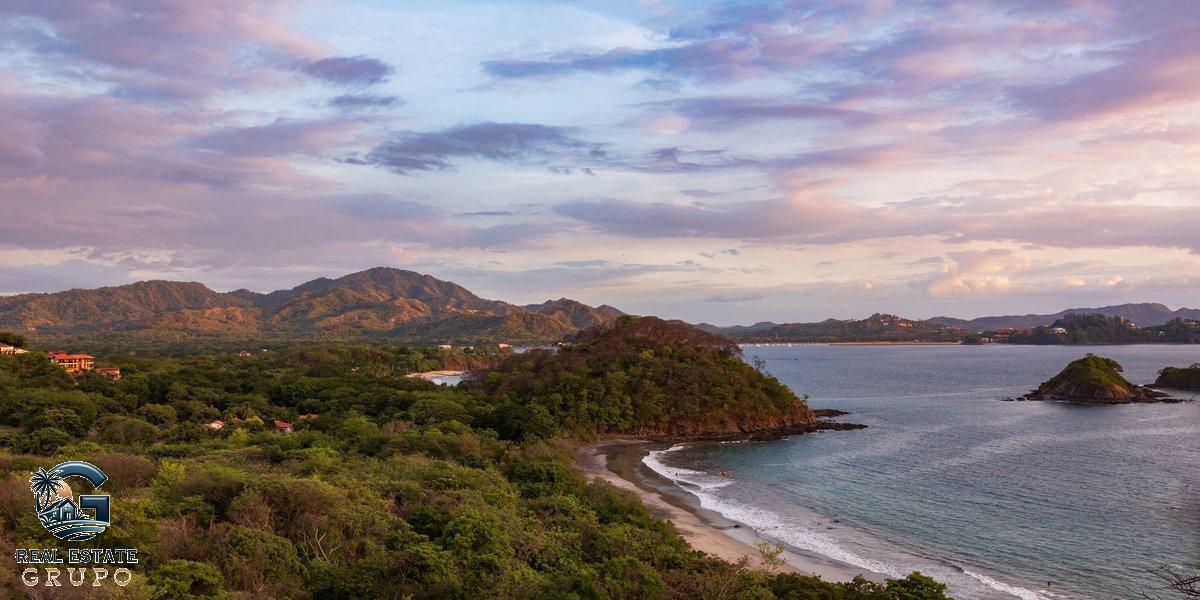
Water in Costa Rica is not one national system. Depending on where the lot sits, service comes from AyA (the national water authority), a CAAR (rural water association, known as an asada), or a private well. In urban areas like San José, Escazú, or Santa Ana, AyA typically handles connections. In rural zones, from Guanacaste beach communities to the hills above Quepos, an asada usually manages the local water supply. These are community-run cooperatives, and each one sets its own rules, connection fees, and availability limits.
The practical question is simple: does this specific lot have a water meter assigned to it, or does it have the right to request one? Those are very different situations. A meter already at the property means water is active and paying. The right to request one means you still need to apply, pay the connection fee, and wait, sometimes months, depending on the asada’s capacity at that moment.
Ask the seller for the water account number or asada membership documents. Then contact the local asada or AyA office directly and confirm that the lot is in good standing and that new connections are currently available. Don’t rely on the seller’s word alone. This is a five-minute phone call that can save you from a very expensive surprise.
How Do You Verify Electricity Access on a Costa Rica Lot?
Electricity in Costa Rica is managed by ICE (Instituto Costarricense de Electricidad) nationally, but several regional distributors handle the actual connections. CNFL serves much of the Greater San José area. COOPELESCA covers the northern zone and parts of the Central Valley. ESPH handles Heredia and surrounding cantons. COOPEGUANACASTE and COOPESANTOS serve their respective regions. Knowing which one manages your lot matters because each has its own application process and timeline.
The fastest check is to look at the neighboring lots or any existing structures on the street. If the street already has power poles and active meters, connection to your lot is typically straightforward. The distributor runs a line from the pole to your property boundary, you pay the connection fee, and service gets established. The timeline and cost vary by distributor and by how far your lot sits from the nearest active line.
If the lot is remote, and some of the most appealing properties in Costa Rica are in areas with no poles in sight, you’re looking at an extension project. That means purchasing poles, wire, transformers, and paying an electrician and the utility company’s installation team. The cost can range from modest to significant depending on distance and terrain. Get a written quote from the regional distributor before you commit to any rural lot without existing power.
What Does “With Services” Actually Mean in a Costa Rica Listing?
This is the phrase that trips up the most buyers. “Con servicios” or “with services” in a Costa Rica listing often means the street or the development has water and electricity available nearby, not that your specific lot has active meters. In a well-developed urbanización (residential subdivision), connections are usually straightforward because the developer already paid to bring lines to each parcel. Outside of a formal development, the phrase can mean almost anything.
Always ask the seller for documentation: the water account number, the electricity meter number (contrato with ICE or the regional distributor), or letters from the relevant utilities confirming that the lot is eligible for connection. If the seller can’t produce any of those, treat the property as unserviced until you confirm otherwise.
| Situation | What It Means for You | Action Required |
|---|---|---|
| Active meter on site | Utility is live and paid up | Confirm account is in good standing, transfer to your name at closing |
| Street has service, lot does not | Connection is possible but not guaranteed | Apply with AyA/asada or regional distributor before committing |
| Development with approved plans | Developer may have block allocation, ask for proof | Request copy of AyA approval or ICE/distributor agreement |
| Rural lot, no poles nearby | Extension required, cost unknown | Get written quote from regional electricity distributor before offer |
| Asada at capacity | No new connections until capacity expands | Verify directly with the asada, consider alternative (well) or walk away |
How Do You Check the Lot’s Legal Status Before Applying for Utilities?
Here’s something most buyers don’t realize. Utility companies in Costa Rica will often ask for the lot’s finca number (the official registry ID for the property) and sometimes the plano catastrado (the surveyed cadastral map registered with the Registro Nacional) when you apply for a new connection. If the property has title issues, liens, or boundary discrepancies in the registry, that application can stall or get rejected.
That’s why you should verify the property at Folio before you even start the utility inquiry process. A clean registry report tells you the lot is legally sound and ready for you to move forward. A report that shows a lien, an annotation (anotación), or a boundary mismatch with the catastro (the cadastral mapping system) tells you to pause and let your attorney resolve it first.
Legal title issues and utility access are more connected than they look on the surface. Sorting the legal side first makes everything else move faster.
Are There Alternatives If Utilities Aren’t Available at the Lot?
Yes, and in some cases they’re genuinely practical. For water, a well (pozo) is common on rural lots throughout Guanacaste, the Southern Zone, and mountain areas. A well needs to be professionally drilled, tested for potability, and in some zones permitted through SENARA (the national groundwater authority). The depth and yield of a well on your specific lot is something you can only know after a hydrogeological study or an actual test drill, so budget for that as part of due diligence.
For electricity, solar with battery storage has become a legitimate alternative for remote lots in Costa Rica. The climate, especially in the dry Pacific zones, makes solar production reliable for most of the year. If you’re building a low-consumption home or a small cabin on an off-grid lot, solar can be a real solution, not just a fallback. Factor the panel and battery system cost into your land-plus-build budget from the start rather than treating it as an afterthought.
Internet connectivity is a separate question entirely, and it matters more than most buyers anticipate if you’re planning to work remotely. Fiber reaches many urban and suburban areas now. Satellite internet (like Starlink) has changed the equation for truly remote lots. Confirm the situation for your specific location before you buy.
What Should You Budget for Utility Connections in Costa Rica?
Costs vary enough that giving you a single number would be misleading. What I can tell you is how to think about the budget. For water, an asada or AyA connection fee for a lot that already has access rights is generally in the few-hundred to low-thousand dollar range. A new well, depending on depth and rock conditions, can run several thousand dollars or more. Don’t skip the test.
For electricity, a simple connection from an existing pole at the street boundary is the lowest-cost scenario. An extension involving multiple poles across a significant distance can grow quickly into a five-figure project in rural areas. Terrain matters a lot. A hillside lot in the mountains above Dominical with no existing line within a kilometer is a completely different situation from a corner lot in an Atenas urbanización where the poles are already at the curb.
Build a line item in your total acquisition cost for utility connection, even if you don’t know the exact number yet. Then get quotes during your due-diligence period, before you’re locked in. Our closing-cost calculator can help you map out the other transactional costs so nothing catches you off guard at the table.
Frequently Asked Questions
Can a foreigner apply for water or electricity in Costa Rica?
Yes. Foreigners can apply for utility connections in Costa Rica using their passport number and the property’s finca number. You don’t need to be a resident. If you’re not in the country, a local attorney with a power of attorney (poder notarial) can handle the application process on your behalf.
How long does it take to get electricity connected to a new lot in Costa Rica?
For a lot with an existing pole at the street, the process with regional distributors typically takes several weeks to a couple of months depending on workload. For a rural extension requiring new infrastructure, the timeline stretches considerably longer, sometimes many months. Get the regional distributor’s estimate in writing during due diligence.
What is an asada and how do I find out which one serves my lot?
An asada (Asociación Administradora de Acueductos y Alcantarillados Comunales) is a community-managed rural water association. To find out which one serves your lot, ask the seller, ask neighbors, or contact the local AyA regional office with the lot’s finca number and they can direct you. In some cases the municipality can also tell you.
Does having utilities at a lot affect its price significantly?
Yes, meaningfully. A lot with active water and electricity meters is worth more than one that requires a connection application, and one that requires infrastructure extension is worth less still. When you’re comparing two lots at similar prices, always factor in the utility situation. A cheaper lot with no services nearby can easily end up costing more in total than a pricier lot that’s already connected. Browse our listings to compare options across different zones.
Do I need to check utilities before or after I get a title search done?
Do both early, but start with the title. If the property has legal problems at the Registro Nacional, utility applications may stall anyway. Once the title is clean, you can confidently contact the utility providers and move forward with connection inquiries. Ordering Folio’s $29 report at the very beginning gives you the registry picture fast, before you invest more time or money in the deal.
Before you wire a deposit, check the property first. Run a free scan on Folio. Tap the lot to see its finca number, lot area, boundary and maritime-zone flag in seconds. Folio’s $29 report adds the registered owner, liens and the plano, usually within 24 hours. Then message Leo on WhatsApp at +506 8798 6122 when you are ready to move on a deal.
Browse current Costa Rica listings
These are properties we are working with right now. New ones get added often, so check back, or message us for off-market options that never hit the public site.

5 bedrooms / 5 bathrooms
Puntarenas Province, Santa Teresa, Costa Rica
CASA CEDRO | MAL PAIS
Puntarenas Province, Santa Teresa, Costa Rica
CASA MAREA with $400,000 down
Malpais, Puntarenas Province, Costa Rica
San Isidro Cóbano
Puntarenas Province, Santa Teresa, Costa Rica
Beachfront Villa in Playa Mal País
Puntarenas Province, Santa Teresa, Costa Rica
heart of Santa Teresa
Puntarenas Province, Santa Teresa, Costa RicaOn the ground in Costa Rica, helping US and Canadian buyers find and safely close the right property. Questions? Message Leo on WhatsApp at +506 8798 6122.


Join The Discussion