 English
 Español
 Français
 עברית
 Português


Costa Rica water rights on a property are not automatically included when you buy land or a home. That surprises a lot of North American buyers who assume water comes with the deed the way it does back home. Here, the right to use water from a river, spring, or well is a separate legal concession granted by the state, and it can expire, be shared with neighbors, or simply not exist at all for the property you are looking at. Before you sign anything, you need to know exactly what water source serves the property, whether that right is formally registered, and who else might have a claim on it. The good news is that this is all checkable, and I will walk you through exactly how.
- Water rights in Costa Rica are a state concession, not a property right that transfers automatically with the deed.
- Properties can be served by a municipal system, a communal ASADA, a private well, or a river concession, and each has different verification steps.
- You should run a title check and a separate water-rights check before any deposit leaves your account.
- A Costa Rican real estate attorney (not just a notary) should review the concession documents alongside the title search.
What Are Water Rights in Costa Rica and Why Do They Matter?
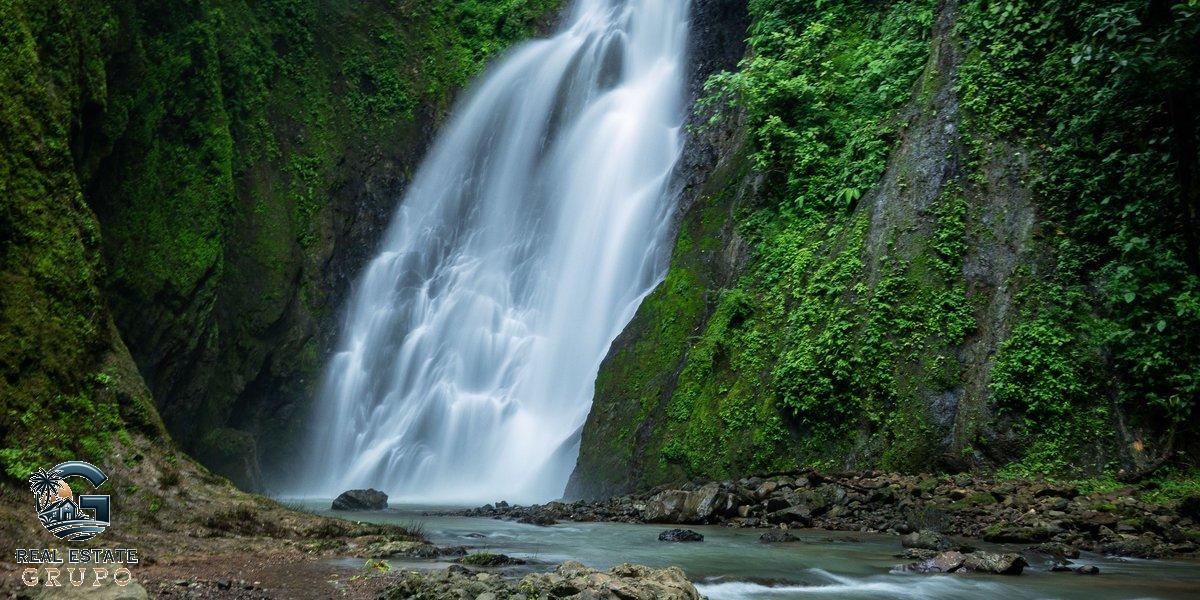
Costa Rica’s legal framework classifies water as a public resource. No individual or company can own water outright. What you can hold is a concession, which is a time-limited government permit to use a specified volume of water from a specific source. The permit is registered with SENARA (the national groundwater authority) or with the Registro Nacional, depending on the type of source.
If a concession lapses or was never obtained in the first place, the new owner inherits that problem. You could purchase a beautiful property in the Central Valley or on the Nicoya Peninsula and then spend months trying to legalize a water source that the seller was quietly using without a permit. That is one of the most common and painful surprises we see in deals that go sideways.
What Types of Water Sources Will You Find on Costa Rica Properties?
The answer to “how is this property watered?” varies a lot by region and by whether the property is in a town, a rural area, or a coastal zone. Here is a plain breakdown of what you will typically encounter.
| Source Type | Who Manages It | What to Verify |
|---|---|---|
| Municipal water (AyA) | Instituto Costarricense de Acueductos y Alcantarillados (AyA), the national water utility | Active service connection, no arrears on the account |
| ASADA (community water association) | A local non-profit committee, common in rural and coastal areas | Active membership, capacity to serve your intended use, ASADA’s own concession status |
| Private well (pozo) | Property owner, regulated by SENARA | SENARA-registered concession, well permit, water quality test |
| River or spring concession (naciente) | Property owner with government concession | Concession number, expiry date, volume allowed, any shared-use agreements |
ASADAs are extremely common outside the GAM (Greater Metropolitan Area, the San Jose metro zone). On the Osa Peninsula, in Guanacaste, and in the Southern Zone, many communities rely on them. An ASADA’s own concession must be valid, and the association must have enough remaining capacity to serve your property at the intensity you plan to use it, whether that is a single home or a rental villa that runs at full occupancy.
How Do You Actually Check the Water Rights on a Costa Rica Property?
Start with a property title check. Run a property check on Folio to find the finca (title number), and order its $29 report for any liens or encumbrances and the plano catastrado (the official cadastral survey map). This tells you what is registered against the property and flags obvious red flags fast. It does not replace a full water-rights investigation, but it is the right first step.
After the title check, the water investigation goes deeper. Your attorney will need to pull the concession record from SENARA for wells, or from MINAE (the Ministry of Environment and Energy, which oversees surface water) for rivers and springs. The concession record shows the volume permitted, the expiry date, and whether the concession is in good standing or has been suspended.
For municipal or ASADA service, the process is simpler. Your attorney contacts AyA or the local ASADA directly and confirms that the meter or connection is active, that there are no unpaid balances, and that the ASADA has capacity. That confirmation should be in writing and included in your due-diligence file.
What Are the Biggest Water-Rights Mistakes Buyers Make?
The most common mistake is assuming the seller’s word is enough. “We have always had great water pressure” is not a legal right. I have seen buyers close on properties in Guanacaste where the water came from a neighbor’s concession, with a verbal arrangement that had no legal standing. When the neighbor sold, the new owner had no obligation to continue sharing.
The second mistake is skipping the ASADA capacity check on properties intended as short-term rentals. An ASADA may have a valid concession but cap the volume available per property. If your business model is running a six-bedroom vacation rental at high occupancy in the dry season, you need to confirm the ASADA can handle that load. This is a real issue on parts of the Nicoya Peninsula, where dry-season water pressure drops and some ASADAs have instituted rationing.
Do Water Rights Transfer to the New Owner at Closing?
It depends on the type of concession. Private well and surface-water concessions granted to an individual are typically tied to the property and can be transferred, but the transfer must be formally registered. This is not automatic. Your attorney needs to file the transfer paperwork with the relevant authority, and there is a process to that which takes time.
Concessions held by an ASADA or AyA do not transfer because there is nothing to transfer. You simply become a new member or account holder. That process is usually straightforward, but confirm it before closing.
If the concession is held in a corporation (sociedad anonima, commonly called an S.A.), and the deal is structured as a share transfer rather than a direct property transfer, the concession stays with the corporation. That sounds convenient, but it also means you inherit any compliance issues the corporation has with the concession authority. Your attorney needs to audit that too.
What Does the Due Diligence Process Look Like in Practice?
A solid water-rights check in Costa Rica runs alongside your standard title due diligence, not after it. Here is what a responsible process looks like.
- Pull the title and finca details first to confirm ownership and spot any registered encumbrances. Use Folio’s property check for a fast first scan, then hand it to your attorney for a full review.
- Identify the water source through the seller disclosure and a site visit. If it is a well, get the SENARA registration number. If it is river-fed, get the MINAE concession number.
- Request copies of the concession documents and have your attorney verify them against the official registry. Check the expiry date and the permitted volume.
- For ASADA or AyA service, request a written confirmation of active service and no outstanding debt on the account.
- Commission a water quality test if the source is a private well. This is especially important in agricultural areas where runoff is a risk.
- Confirm that any environmental permits related to the water use are current through SETENA, particularly for larger developments or properties near protected zones.
If you are buying a property as a rental investment, the water situation is directly tied to your returns. A property with unreliable or legally ambiguous water rights carries real operational risk that affects both nightly rates and guest reviews. You can use our rental ROI calculator to model the numbers, but factor in the risk of water-related downtime before you get too attached to the projections.
On the cost side, due diligence and closing costs in Costa Rica include legal fees that cover title review and, if your attorney is thorough, the water-rights review as well. Use our closing-cost calculator to get a realistic picture of what you will spend before the deal closes. And if you are exploring seller-financed deals, which are common in Costa Rica, check our owner-financing calculator too.
Want to browse properties where the basics are already flagged? Browse our current listings and reach out when something catches your eye.
Frequently Asked Questions
Can a foreign buyer hold a water concession in Costa Rica?
Yes. Foreign individuals and foreign-owned corporations can hold water concessions in Costa Rica. The process is the same as for a Costa Rican national. What matters is that the concession is properly registered and current, not the nationality of the holder.
What happens if a property has no registered water rights?
You either negotiate with the seller to legalize the water source before closing, reduce the price to reflect the risk and cost of doing it yourself, or walk away. Trying to legalize an unregistered well or informal water use after closing can take considerable time and is not guaranteed to succeed, especially if the source is over-allocated or environmentally sensitive.
How long does a water concession last in Costa Rica?
Concessions are granted for fixed terms and must be renewed. The length of the term varies depending on the type of use and the authority granting it. Always confirm the expiry date and whether a renewal application is already in process, because a lapsed concession that has not been renewed is a liability you do not want to absorb.
Is a private well always the best option for a rural Costa Rica property?
Not necessarily. Private wells offer independence from ASADA politics and capacity limits, but they require a valid SENARA registration, regular water quality testing, and pump maintenance. In areas with a high water table and reliable rainfall, such as the Southern Zone or the Caribbean, wells tend to be more dependable. In Guanacaste’s dry corridor, a well can run low in the dry season if the surrounding water table has dropped from agricultural use nearby.
What is an ASADA and how do I know if it is reliable?
An ASADA (Asociación Administradora de Sistemas de Acueductos y Alcantarillados Comunales) is a community-run water committee that operates under a concession from AyA. Quality varies widely. Some ASADAs in popular expat areas like Atenas or the Dominical corridor are well-run and financially stable. Others in more remote areas operate informally with aging infrastructure. Ask to see the ASADA’s most recent concession renewal, their member roster, and any record of water-rationing events in dry years. Your agent or attorney should know the local reputation.
Before you wire a deposit, check the property first. Run a free scan on Folio. Tap the lot to see its finca number, lot area, boundary and maritime-zone flag in seconds. Folio’s $29 report adds the registered owner, liens and the plano, usually within 24 hours. Then message Leo on WhatsApp at +506 8798 6122 when you are ready to move on a deal.
Browse current Costa Rica listings
These are properties we are working with right now. New ones get added often, so check back, or message us for off-market options that never hit the public site.

5 bedrooms / 5 bathrooms
Puntarenas Province, Santa Teresa, Costa Rica
CASA CEDRO | MAL PAIS
Puntarenas Province, Santa Teresa, Costa Rica
CASA MAREA with $400,000 down
Malpais, Puntarenas Province, Costa Rica
San Isidro Cóbano
Puntarenas Province, Santa Teresa, Costa Rica
Beachfront Villa in Playa Mal País
Puntarenas Province, Santa Teresa, Costa Rica
heart of Santa Teresa
Puntarenas Province, Santa Teresa, Costa RicaOn the ground in Costa Rica, helping US and Canadian buyers find and safely close the right property. Questions? Message Leo on WhatsApp at +506 8798 6122.


Join The Discussion