 English
 Español
 Français
 עברית
 Português


Checking farmland (finca) in Costa Rica before you buy is not optional, it is the single step that separates buyers who close with confidence from those who inherit someone else’s legal mess. A finca is the Costa Rican registry term for a titled parcel, and every piece of land, from a hillside coffee farm in Tarrazú to a cattle ranch in Guanacaste, carries its own finca number registered at the Registro Nacional. That number unlocks the full paper trail: who owns it, what debts are attached, whether the boundaries match the map, and whether any environmental or maritime restrictions cut across it. Before you wire a deposit or shake hands on a price, you need that trail in front of you. This guide walks you through every layer of due diligence for buying farmland in Costa Rica, in plain English, so nothing catches you off guard at the notary’s table.
- Every titled parcel in Costa Rica has a unique finca number. That number is your starting point for all due diligence.
- Title verification, lien searches, boundary checks, and zoning reviews are four separate steps. Skipping any one of them is a real risk.
- Agricultural land near a coast or river may carry maritime zone or environmental restrictions that a basic title search will not flag on its own.
- A Costa Rican notary-attorney (not just a realtor) must close the transaction, but your due diligence should start well before you hire one.
What is a finca and why does the number matter when checking farmland in Costa Rica?
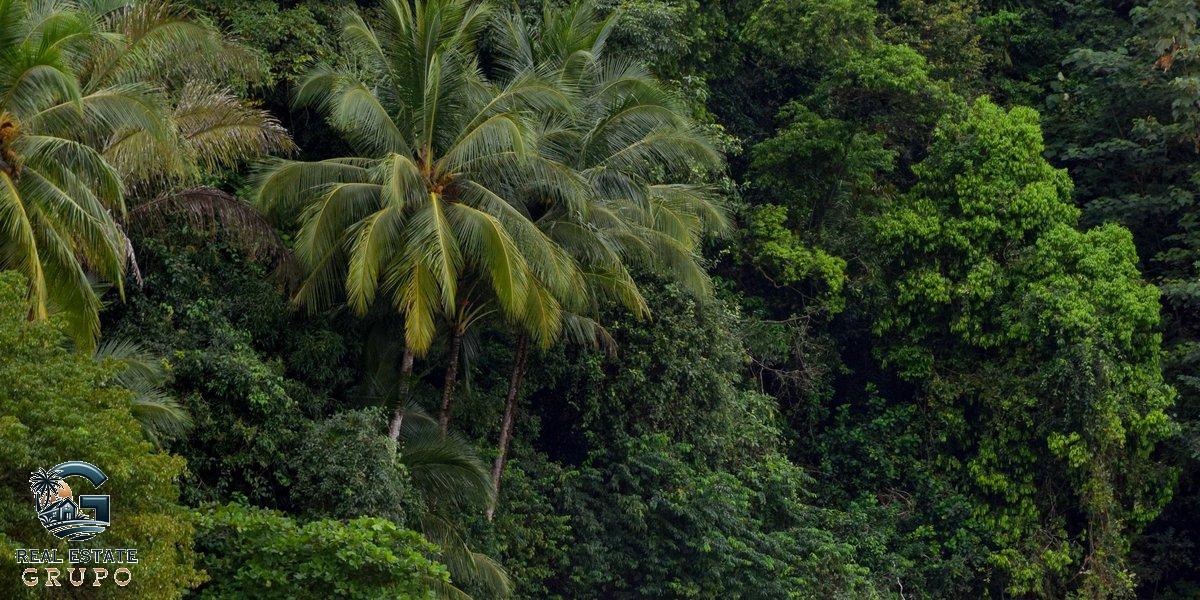
In Costa Rica, every titled property is assigned a finca number by the Registro Nacional, the national public registry. Think of it as the property’s official ID. When you run a property check using that number and order the $29 report, you can pull the full ownership history, any mortgages or liens recorded against it, and the registered measurements. Without the finca number, you are guessing.
Farmland can be broken into several types. You might see a finca filial (a unit within a condominium-style subdivision), a finca madre (the parent parcel before subdivision), or a plain finca individual. On agricultural land, it is common to find old finca madres that were never properly subdivided, meaning the seller might only own a portion of what they are showing you. That is exactly the kind of discrepancy a registry search will expose before money changes hands.
Sellers do not always know their own finca number off the top of their head. Ask for it in writing. If they cannot produce it, that is already a yellow flag. Any agent working a legitimate deal should have it ready.
How do you verify the title and ownership of agricultural land in Costa Rica?
Title verification in Costa Rica means confirming that the person offering to sell you the land is actually the registered owner, that the title is clean, and that no one else has a recorded claim. The Registro Nacional is the authoritative source. A title search there will show the current owner’s name and cedula (national ID number), the chain of title going back through past transfers, and any recorded mortgages, easements, or annotations.
The mistake we see most often is buyers accepting a seller’s verbal assurance that the title is clean. It costs little to verify that claim formally. You can check the title through Folio’s $29 report, which pulls live registry data into one readable report. Your Costa Rican notary-attorney will also run a full search as part of closing, but doing it early, before you sign a purchase option or pay a deposit, puts you in control.
What liens, annotations, and encumbrances should you look for on a Costa Rica finca?

A lien (gravamen in Spanish) is a recorded financial claim against a property, usually from a mortgage or an unpaid loan. Annotations (anotaciones) are temporary flags that signal a pending legal action, dispute, or process. Both will appear in the Registro Nacional data and both travel with the land, not with the seller. Buy a finca with an unresolved lien and you inherit that debt.
On agricultural land specifically, watch for unpaid property taxes recorded as a lien, irrigation district fees in farming zones like the Arenal-Tempisque area, or court-ordered freezes from inheritance disputes. Rural properties that have stayed in one family for generations are particularly prone to the latter. The Poder Judicial (Costa Rica’s court system) handles those proceedings, and a good notary will cross-check both registries.
Clearing a lien before closing is possible, but it takes time and sometimes negotiation. Build that reality into your timeline. Do not assume a seller’s promise to clear it before closing will happen in 30 days.
How do boundary maps (plano catastrado) work for farmland in Costa Rica?
Every titled property should have a corresponding plano catastrado, a surveyed boundary map filed with the Catastro Nacional (national survey office), which is part of the Registro Nacional. The plano shows the shape, dimensions, and area of the parcel, and it carries its own unique catastro number.
Here is where farmland due diligence gets specific. In agricultural zones, it is not uncommon to find a property where the finca and the plano do not match. The registered area on the title might say 50 hectares but the surveyed plano shows 43. That gap matters enormously if you are buying for production, subdivision potential, or per-hectare pricing. Always confirm that the finca and the plano reference each other and that the physical boundaries on the ground match the map on file.
If there is no registered plano, or the existing one is decades old, you should commission a new survey by a licensed topographer (topógrafo) before closing. It costs a few hundred to a few thousand dollars depending on the size and terrain of the farm, and it can save you from a boundary dispute with a neighbor later.
| Document | What it confirms | Where to check |
|---|---|---|
| Finca number / title | Ownership, liens, annotations, transfer history | Registro Nacional / Folio |
| Plano catastrado | Surveyed area, shape, boundary coordinates | Catastro Nacional / Folio |
| Uso de suelo (land use) | Permitted uses: farming, residential, commercial | Local municipality |
| SETENA viability | Environmental impact clearance for development | SETENA |
| Maritime zone status | Whether land falls in the 200m coastal zone | ICT / municipal concession files |
Does agricultural land in Costa Rica have environmental or zoning restrictions?
Yes, and this is the area where foreign buyers most often get surprised. Costa Rica takes environmental protection seriously. Farmland near rivers, wetlands, or forests may carry buffer zone restrictions (áreas de protección) that prohibit construction or even certain farming activities within a set distance. These restrictions can exist even if they are not spelled out on the title itself.
SETENA (the environmental permitting agency) handles impact assessments for any significant land-use change or development. If you plan to build structures, clear land, or change the use from, say, passive cattle grazing to an agritourism operation, you will likely need a SETENA viability filing before you can get permits from the municipality.
Zoning (uso de suelo) is set by each local municipality, not nationally. A parcel zoned for agriculture in the Pérez Zeledón canton may have very different restrictions than one in Nicoya. Always request the uso de suelo certificate from the relevant municipal office as part of your due diligence, especially if your business plan depends on building a house, cabins, or processing facilities on the farm.
What is the maritime zone and can it affect farmland near the Costa Rica coast?
The Zona Marítimo Terrestre (ZMT) is a 200-meter strip measured from the average high-tide line along every Costa Rican coast. The first 50 meters is public domain, and no one can own it. The next 150 meters is concession land, meaning you can hold a long-term concession (like a lease from the state) but you cannot hold titled fee-simple ownership. Foreigners who have not been residents for at least five years cannot hold a concession directly.
Why does this matter for farmland? Because coastal farms in Guanacaste, the South Pacific, or the Caribbean often sit partially in the ZMT without the buyer realizing it. A title search alone will not always flag this. You need to check the maritime zone status separately, which you can do through ICT (the Costa Rican tourism institute manages coastal concession records in cooperation with municipalities) or by running a full property check that cross-references coastal mapping data.
What are the costs involved in buying farmland in Costa Rica?
Closing costs on a Costa Rica real estate purchase typically include transfer taxes, stamp duties, notary fees, and Registro Nacional registration fees. These are calculated on the registered or declared value, and they add up to a meaningful percentage of the purchase price. Before you negotiate your final number, run the figures through a closing cost calculator so there are no surprises at the notary’s table. You can use the free closing-cost calculator at Real Estate Grupo to get a realistic estimate based on your deal.
If you are considering owner financing (where the seller holds a mortgage rather than a bank), the structure of the deal changes how costs are calculated and what security instruments are recorded at the Registro. The free owner-financing calculator can help you model that scenario. For farmland being bought as an income-producing asset, whether a coffee operation, cacao farm, or agritourism property, the rental ROI calculator gives you a way to pressure-test the return before you commit.
Property taxes in Costa Rica are assessed annually and are generally low compared to North American standards. They are paid to the local municipality based on the declared property value. Unpaid property taxes can result in a recorded lien, so always confirm the tax account is current as part of your due diligence. The Ministerio de Hacienda oversees the national tax framework, while local collection happens at the municipal level.
How do you find trustworthy farmland listings in Costa Rica?
The short answer is to work with agents who know rural property, not just beachfront condos. Agricultural land due diligence is genuinely different from a residential purchase. Water rights, access roads (derechos de paso), infrastructure like wells and septic systems, crop or livestock inventory, and farm labor agreements all need to be part of the conversation. An agent who has not dealt with a finca madre subdivision or a water concession before may miss things that matter.
You can browse current farm and land listings across Costa Rica at Real Estate Grupo’s property listings, which include agricultural and rural properties alongside residential and commercial options. When you find something worth a closer look, the first move is always a title and property check before you spend time and travel money visiting in person.
Frequently Asked Questions
Can a foreigner own farmland in Costa Rica outright?
Yes. Costa Rica allows foreigners to own titled (fee-simple) property on the same terms as Costa Rican citizens, with one major exception: coastal concession land in the maritime zone cannot be held directly by a foreigner who has not been a resident for at least five years. Titled agricultural land outside the maritime zone has no such restriction.
What is the difference between titled land and concession land in Costa Rica?
Titled land (fee-simple) is recorded in the Registro Nacional and you own it outright. Concession land is state-owned land, mainly in the maritime zone, where the government grants a long-term use right rather than full ownership. Concessions are administered by municipalities under ICT oversight and can be transferred, but they carry more restrictions and are harder to finance through traditional lending.
How long does a farmland purchase take to close in Costa Rica?
A straightforward cash purchase with clean title can close in two to four weeks once due diligence is complete and both parties sign a purchase option (opción de compra). If there are liens to clear, surveys to commission, environmental studies, or financing to arrange, three to six months is more realistic for a rural agricultural property. Do not let a seller rush you past proper due diligence.
Do I need a Costa Rican attorney to buy farmland?
Yes. In Costa Rica, only a licensed notary-attorney (notario público) can execute the transfer deed (escritura) and register it with the Registro Nacional. Your attorney is not just a formality. They are the professional responsible for confirming clear title, drafting the deed, paying transfer taxes, and registering the new ownership. Choose someone who regularly handles rural property transactions, not just residential closings.
What is a plano catastrado and do I need a new survey before buying?
A plano catastrado is the official boundary survey filed with Costa Rica’s Catastro Nacional. It defines the legal shape and area of the parcel. You should verify that a current registered plano exists and that it matches the title’s recorded area. If the plano is old, missing, or shows a different area than what is on the title or on the ground, commissioning a new survey by a licensed topographer before closing is strongly recommended, especially for larger or irregularly shaped farms.
Before you wire a deposit, check the property first. Run a free scan on Folio. Tap the lot to see its finca number, lot area, boundary and maritime-zone flag in seconds. Folio’s $29 report adds the registered owner, liens and the plano, usually within 24 hours. Then message Leo on WhatsApp at +506 8798 6122 when you are ready to move on a deal.
Browse current Costa Rica listings
These are properties we are working with right now. New ones get added often, so check back, or message us for off-market options that never hit the public site.

5 bedrooms / 5 bathrooms
Puntarenas Province, Santa Teresa, Costa Rica
CASA CEDRO | MAL PAIS
Puntarenas Province, Santa Teresa, Costa Rica
CASA MAREA with $400,000 down
Malpais, Puntarenas Province, Costa Rica
San Isidro Cóbano
Puntarenas Province, Santa Teresa, Costa Rica
Beachfront Villa in Playa Mal País
Puntarenas Province, Santa Teresa, Costa Rica
heart of Santa Teresa
Puntarenas Province, Santa Teresa, Costa RicaOn the ground in Costa Rica, helping US and Canadian buyers find and safely close the right property. Questions? Message Leo on WhatsApp at +506 8798 6122.


Join The Discussion