 English
 Español
 Français
 עברית
 Português


A costa rica property lawyer check is not legally required before you make an offer, but skipping any form of due diligence before wiring money is the single biggest mistake foreign buyers make here. Costa Rica has a fully public property registry, the Registro Nacional, where ownership records, liens, mortgages, and boundary maps are open to anyone. That means you can verify a surprising amount on your own, or through a tool like Folio, before you ever pay a lawyer’s retainer. Where a licensed Costa Rican attorney becomes truly essential is at the contract and closing stage, and when the title situation is genuinely complicated. Here is exactly where the line falls.
- The Registro Nacional is public, so basic title checks don’t require a lawyer.
- A licensed Costa Rican attorney is legally required to draft and notarize the purchase deed (escritura).
- Maritime zone properties (concession land near the beach) carry extra legal complexity and you should never skip attorney review on these.
- Running a preliminary property check yourself saves time and flags problems before you spend money on legal fees.
What Can You Actually Check Without a Costa Rica Property Lawyer?
More than most buyers realize. The Registro Nacional stores every registered property’s finca number (think of it as the property’s national ID), the registered owner, any mortgages (hipotecas), liens (gravámenes), annotations (anotaciones, which are essentially pending legal claims), and the plano catastrado, which is the official surveyed boundary map. All of this is public record.
A preliminary title search used to mean hiring a runner to sit in a government office in San José. Now you can run a property check digitally by entering the finca number: the parcel appears in minutes, and Folio’s $29 report shows who owns it, whether it’s mortgaged, and whether there are any annotations that signal trouble. That’s real, actionable information before you spend a colón on legal fees.
What you can’t fully interpret without legal training is what some of those results mean in context. A lien might be routine or it might be a dealbreaker. An annotation from a creditor is very different from one filed by a municipal authority. That’s where the lawyer’s judgment adds value, not the act of pulling the record itself.
Do You Need a Lawyer to Check a Property in Costa Rica During the Offer Stage?
No, not for the initial check. But you do need one before you sign a binding purchase option (opción de compra) or a promise-to-buy agreement (compromiso de compraventa). Those are legally enforceable contracts in Costa Rica, and the terms matter enormously, especially around deposit protection, conditions precedent, and what happens if the seller defaults.
The mistake we see most often is buyers who fall in love with a property on a Monday, sign a handwritten offer on Wednesday without legal review, wire a deposit on Friday, and then discover a problem the following week. At that point, recovering your deposit depends entirely on what that document says. Get the check done first. Then get a lawyer before you sign anything binding.
When Is a Costa Rica Property Lawyer Check Legally Required?

At closing. Full stop. Costa Rican law requires that property transfers be executed before a licensed notary public (notario público), and in Costa Rica, notaries are also practicing attorneys. The escritura (the deed of transfer) must be drafted, read aloud to the parties, signed, and registered by a Costa Rican attorney who holds a notarial commission. There is no workaround for this step.
Your attorney will also run a full title search as part of the closing process, confirm the plano catastrado matches the physical property, pay the transfer taxes to Hacienda, and register the new deed at the Registro Nacional. That bundle of work is both legally required and genuinely valuable. Attorney fees for this are set by the Costa Rican Bar Association (Colegio de Abogados) as a percentage of the transaction value, so you can budget for them. Use our closing-cost calculator to get a realistic estimate before you’re deep in negotiations.
What About Beach Properties and Maritime Zone Land?
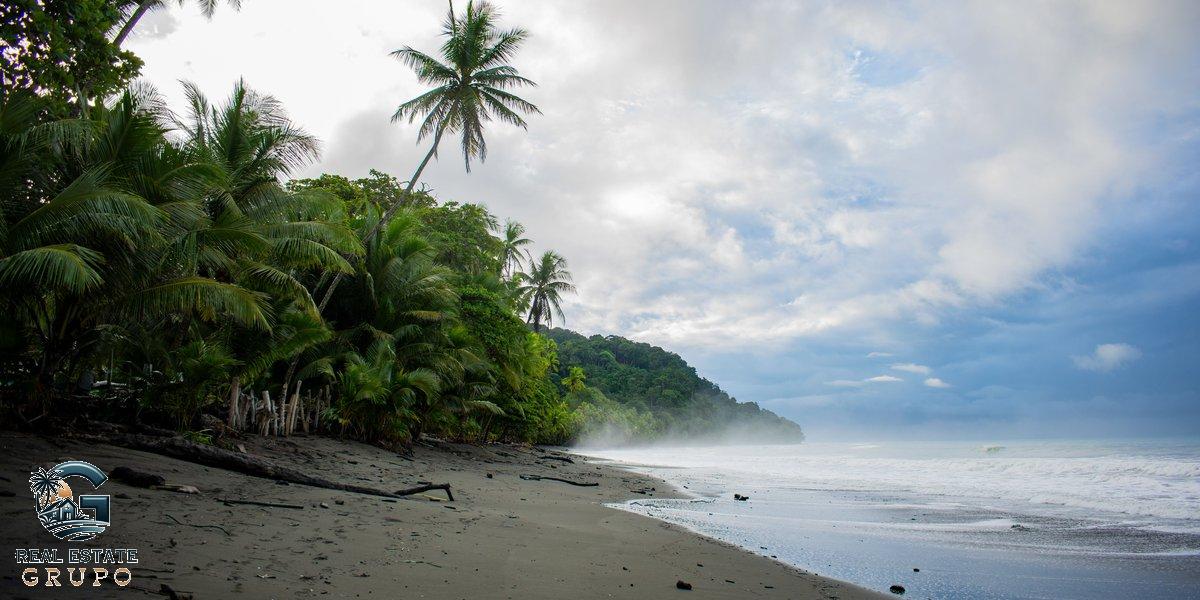
This is where things get genuinely complicated, and where I’d never tell a buyer to rely on a self-check alone. Properties within 200 meters of the high-tide line on most of Costa Rica’s coastline fall under the Zona Marítima Terrestre (ZMT), the Maritime Terrestrial Zone. The first 50 meters from the high-tide line are inalienable public land. Nobody can own them. The next 150 meters are concession land, meaning you hold a government-granted concession, not a titled deed.
Concession land cannot be directly owned by foreigners who are not Costa Rican residents, and it must be held through a municipally approved structure. The concession has an expiration date, annual fees payable to the municipality, and can be revoked. Verifying maritime zone status is a multi-step process involving the municipality, the Instituto Costarricense de Turismo (ICT), and sometimes SETENA for environmental permits. An attorney who specializes in coastal property is non-negotiable here.
| Property Type | Can You Self-Check? | Lawyer Required at Closing? | Extra Complexity |
|---|---|---|---|
| Titled inland property | Yes, via Registro Nacional or Folio | Yes | Low to moderate |
| Titled beach-area property (outside ZMT) | Yes, but verify ZMT boundaries carefully | Yes | Moderate |
| Concession land (ZMT, 50-200m zone) | Partially, for basic finca data | Yes, specialist strongly advised | High |
| Property held in S.A. or SRL (corporation) | Title check yes, but corporate books need review | Yes | Moderate to high |
How to Choose the Right Lawyer for a Costa Rica Property Transaction
Not every Costa Rican attorney handles real estate. You want someone who specifically practices bienes raíces (real estate law) and who has experience with foreign buyers. Ask directly how many closings they handle per year and whether they’ve worked with clients from the US or Canada. The process has specific requirements around FBAR reporting, FIRPTA doesn’t apply here but other US tax considerations do, and a good attorney will at least flag those for you to discuss with your US accountant.
Get a written fee estimate before you engage anyone. Attorney fees at closing are regulated, but fees for preliminary due diligence, contract review, and corporate structuring advice are negotiated separately. Don’t assume one quote covers everything.
What a Title Search Won’t Tell You (And What Else to Check)
A clean Registro Nacional record means the title is clear of registered encumbrances. It does not mean the property has the right use permits, that structures on it were built with municipal approval, or that there are no boundary disputes with neighbors. Those issues live in different databases at the municipality (municipalidad) and require a separate review.
For investment properties you plan to rent, you’ll also want to look at zoning (uso de suelo), confirm that tourist rental is permitted, and understand the local rental market. Browse current property listings in areas like Tamarindo, Nosara, Manuel Antonio, or the Central Valley to get a sense of what inventory looks like and what comparable properties are actually selling for. Use the rental ROI calculator to stress-test whether the numbers work before you commit.
Environmental restrictions are another layer. Properties near rivers, wetlands, or protected areas can have SETENA-imposed restrictions that significantly limit what you can build. These restrictions may not appear in the Registro Nacional at all. Your attorney should check with SETENA if the property is near any sensitive zone.
Frequently Asked Questions
Can a foreigner buy property in Costa Rica without a lawyer?
You can research and make offers without one, but you cannot legally complete the title transfer (the escritura) without a licensed Costa Rican attorney who also holds a notarial commission. There is no exception to this rule, and there shouldn’t be. The attorney’s job at closing protects both parties and ensures the deed is registered correctly at the Registro Nacional.
How much does a property lawyer cost in Costa Rica?
Attorney fees for drafting and registering the purchase deed are set by the Costa Rican Bar Association as a percentage of the declared transaction value, which makes them broadly predictable. Additional services like contract review, corporate structuring, or due diligence research are billed separately and vary by attorney and complexity. Use the closing-cost calculator for a working estimate of total transaction costs.
What is a finca number in Costa Rica?
The finca is the unique identifier assigned to each registered property in Costa Rica’s Registro Nacional. Think of it like a parcel ID number in the US. Every piece of titled land has one. When you provide the finca number, an attorney, a registry search, or Folio’s $29 report can pull ownership records, mortgage details, liens, and the linked plano catastrado (the official surveyed boundary map).
Is it safe to buy property in Costa Rica as an American or Canadian?
Yes, with proper due diligence. Costa Rica’s constitution grants foreigners the same property rights as citizens for titled property. The registry system is transparent and public. The risks that do exist, title irregularities, undisclosed liens, maritime-zone issues, or unpermitted construction, are manageable when you verify the property thoroughly before signing and use a qualified local attorney at closing.
What happens if I buy a property with a lien I didn’t know about?
In Costa Rica, registered encumbrances follow the property, not the seller. If you buy a property with an undiscovered mortgage or lien and it was properly registered at the time of sale, that obligation can affect you as the new owner. This is exactly why running a title check before signing anything binding is so important. Catching a lien at the research stage costs nothing to address. Discovering it after closing is a legal problem that can take months and real money to resolve.
Before you wire a deposit, check the property first. Run a free scan on Folio. Tap the lot to see its finca number, lot area, boundary and maritime-zone flag in seconds. Folio’s $29 report adds the registered owner, liens and the plano, usually within 24 hours. Then message Leo on WhatsApp at +506 8798 6122 when you are ready to move on a deal.
Browse current Costa Rica listings
These are properties we are working with right now. New ones get added often, so check back, or message us for off-market options that never hit the public site.

5 bedrooms / 5 bathrooms
Puntarenas Province, Santa Teresa, Costa Rica
CASA CEDRO | MAL PAIS
Puntarenas Province, Santa Teresa, Costa Rica
CASA MAREA with $400,000 down
Malpais, Puntarenas Province, Costa Rica
San Isidro Cóbano
Puntarenas Province, Santa Teresa, Costa Rica
Beachfront Villa in Playa Mal País
Puntarenas Province, Santa Teresa, Costa Rica
heart of Santa Teresa
Puntarenas Province, Santa Teresa, Costa RicaOn the ground in Costa Rica, helping US and Canadian buyers find and safely close the right property. Questions? Message Leo on WhatsApp at +506 8798 6122.


Join The Discussion