 English
 Español
 Français
 עברית
 Português


The costa rica maritime zone concession is one of the most misunderstood pieces of the country’s real estate puzzle, and it trips up North American buyers more than almost anything else. Here’s the short version: Costa Rica law prohibits private ownership of the first 200 meters inland from the mean high-tide line. That strip is public land. What you can hold instead is a concession, a government-granted right to use and develop a specific parcel within that zone for a set term. It’s not a deed in the traditional sense, and understanding that difference before you fall in love with a beachfront property could save you a serious amount of money and heartache.
- The Maritime Zone Law (Law 6043) governs all land within 200 meters of the high-tide line, and no one can hold titled fee-simple ownership of it.
- A concession is a renewable, transferable use-right granted by the municipality and ratified by the national government, not a traditional property deed.
- Foreign nationals who have not been legal residents of Costa Rica for at least five years cannot hold a concession directly in their own name.
- Due diligence on concession property requires checking the municipal land-use plan (plan regulador) and the concession status at the Registro Nacional before making any offer.
What exactly is the Costa Rica Maritime Zone?
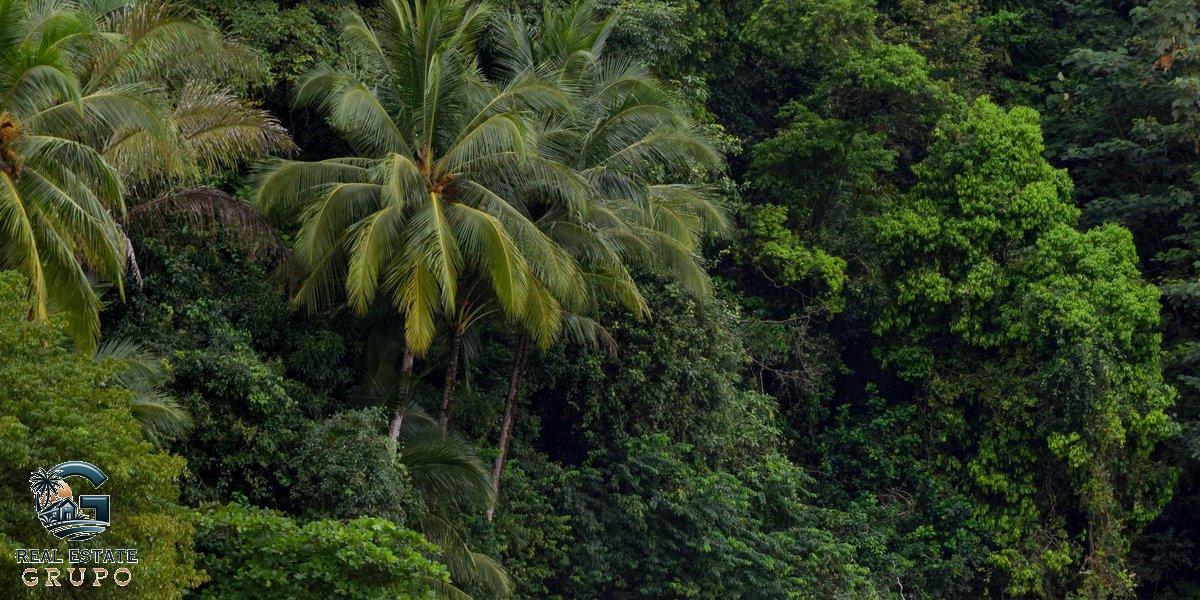
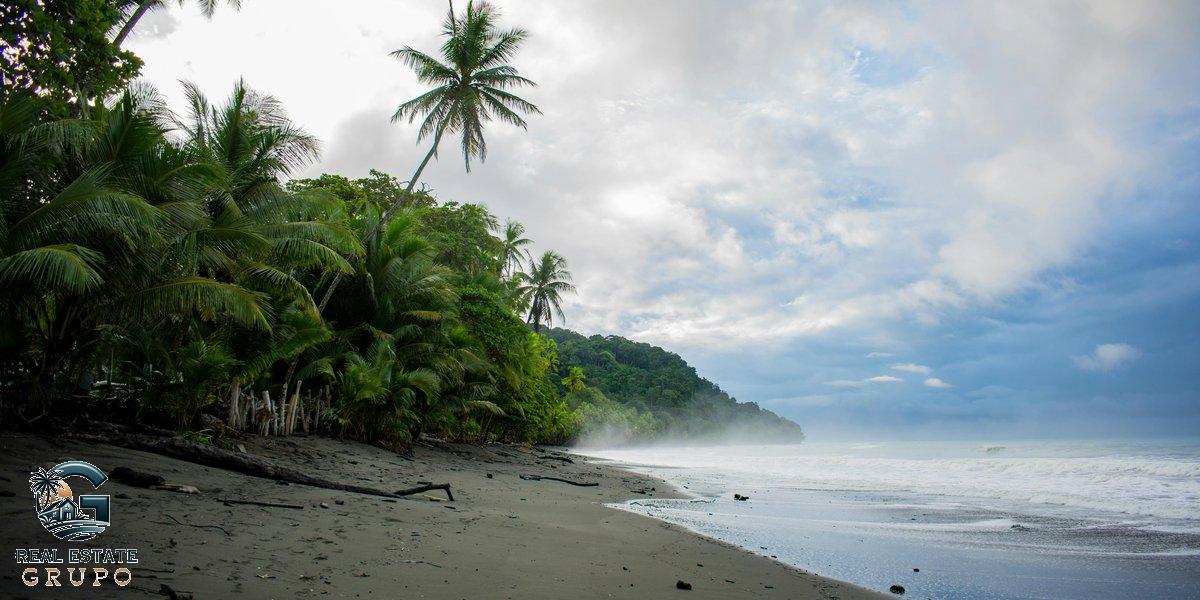
The Maritime Terrestrial Zone, known locally as the Zona Marítimo Terrestre or ZMT, covers the 200-meter strip running inland from the mean high-tide line along every ocean coastline in the country. The law that created it, commonly called the Maritime Zone Law, has been in place for decades and is firmly constitutional. No amount of clever lawyering changes the underlying rule: that land is owned by the Costa Rican state.
The first 50 meters closest to the water are called the public zone (zona pública). Nobody builds there, period. No concessions are granted in the public zone. It’s meant for open public access, and enforcement, while inconsistent in some areas, is real enough that you should treat it as an absolute line.
The remaining 150 meters behind the public zone make up the restricted zone (zona restringida). This is where concessions actually exist, where beachfront hotels, homes, and restaurants operate legally under government permission rather than private title.
How does a concession actually work?
A concession is a contract between you (or your Costa Rican corporation) and the state. The municipality grants it at the local level, and it must be ratified at the national level through the Instituto Costarricense de Turismo, or ICT, in tourist zones. The term is typically renewable, usually in blocks of years that vary by municipality, and the concession specifies exactly what you can build, how you can use the land, and what restrictions apply.
You pay an annual concession fee to the municipality instead of paying property taxes in the traditional sense. The fee is calculated based on the declared value and the land-use category, and municipalities set their own rates. Failing to pay can put the concession in jeopardy, so this is not a cost to ignore.
A concession can be sold, inherited, or transferred, but the transfer must be approved and registered properly. Buyers sometimes assume a handshake or a private contract is enough to transfer rights. It is not. The transaction needs to go through the formal legal process, and the new holder still needs to meet the residency rules.
Can foreigners own a concession in Costa Rica?
This is where a lot of buyers get surprised. Costa Rican law restricts direct concession ownership for foreign nationals who are not legal residents with at least five years of residency status. If you’re a US or Canadian citizen who just arrived or holds a tourist visa, you cannot hold a concession in your own name.
The workaround most buyers use is a Costa Rican corporation (sociedad anónima, or S.A.) with at least 50 percent Costa Rican ownership. This structure is widely used and legally recognized, but it adds complexity and requires careful legal drafting to protect your actual economic interest in the property. Some buyers partner with a trusted Costa Rican co-owner, while others structure their shareholding carefully so that the Costa Rican majority shareholder’s interest is clearly defined and limited.
This is exactly the kind of detail where cutting corners comes back to hurt people. The mistake we see most is a buyer who sets up a corporation quickly and cheaply without properly documenting what each shareholder actually controls. Get an independent Costa Rican attorney, not just the seller’s attorney, to draft those corporate documents.
What’s the difference between titled beachfront and concession land?
Some beachfront and near-beach properties in Costa Rica carry full fee-simple title (escritura). These properties typically sit outside the 200-meter maritime zone, often on bluffs, hillsides, or back-beach lots that legally fall beyond the ZMT boundary. Titled land can be owned outright by foreigners with no residency requirement, just like any other property in Costa Rica.
The practical difference matters a lot for financing, insurance, and long-term security. Most international lenders and many Costa Rican banks are far more comfortable lending against titled land than against a concession. Insurance underwriters may treat concession improvements differently too. And at resale, a titled beachfront lot often carries a premium because the buyer pool is broader.
| Feature | Titled Property | Concession Property |
|---|---|---|
| Ownership type | Fee-simple deed | Government use-right |
| Foreigner eligibility | Yes, no residency needed | Requires 5+ yr residency or CR corporation |
| Annual obligation | Property tax (impuesto territorial) | Concession fee to municipality |
| Term | Perpetual | Fixed term, renewable |
| Financing ease | More lender-friendly | Harder to finance |
| Transfer process | Notarial deed | Municipal + national approval required |
Which beaches have concession property, and does location matter?
Virtually every developed beach in Costa Rica has concession land in the restricted zone. You’ll encounter it in the Guanacaste corridor from Playa del Coco down to Tamarindo and Nosara, along the Central Pacific coast in Jacó, Manuel Antonio, and Dominical, and on the Southern Pacific in areas like Uvita and Pavones. The rules are national, but enforcement, municipal plan quality, and concession documentation vary enormously by location.
Some municipalities have well-developed regulatory plans (planes reguladores) that have been officially approved and published. Others are still operating without a fully ratified plan, which creates legal grey areas around what can be built and what concessions are formally valid. Tamarindo’s municipality, for example, has gone through several iterations of its regulatory plan. Nosara has its own long history of land-use tensions. Knowing the municipal status in the specific area you’re targeting is not optional research.
What due diligence do you need before buying concession property?
Start with the concession file at the municipality. You want to see the original grant, any modifications, the current fee payment history, and the approved use (residential, commercial, tourism, or mixed). A gap in fees or an unapproved use can create problems that survive the sale.
Run the concession number through the Registro Nacional to confirm it’s properly registered and that there are no liens, disputes, or encumbrances attached to it. If the concession is held in a corporation, do the same due diligence on the corporation itself. Check that corporate taxes and annual filings are current with Hacienda, Costa Rica’s tax authority.
Check the municipal regulatory plan. You need to know what the land-use designation allows before you assume you can build what you’re imagining. Environmental permits for construction near the coast often require review by SETENA, Costa Rica’s environmental permitting authority. This step is frequently skipped by buyers who are in a rush, and it creates costly surprises later.
Use our free property map as a starting point to see the finca and the maritime-zone flag, then follow up with a licensed Costa Rican attorney for the full concession review. You can also talk to our team directly if you want guidance on which documents to request before making an offer.
Frequently Asked Questions
Can a US citizen buy beachfront property in Costa Rica?
Yes, but with conditions depending on the property type. US citizens can buy titled land anywhere in Costa Rica with no residency requirement. For concession land within the maritime zone, you’ll need either five years of legal residency or a Costa Rican corporation with at least 50 percent Costa Rican ownership. Many US buyers use the corporate structure, which is well-established legally when done correctly.
How long does a concession last, and can it be renewed?
Concessions are typically granted for fixed terms, often between 5 and 20 years depending on the municipality and the use category, and they are renewable. Renewal is not guaranteed automatically. It requires that you’ve complied with the terms, paid the fees, and meet the current regulatory requirements. In practice, long-standing concessions held in good standing are generally renewed, but you shouldn’t treat renewal as a legal certainty without reviewing the specific municipal rules.
What happens if a concession expires or is revoked?
If a concession lapses, the land and any improvements on it revert to the state. This is the fundamental risk that distinguishes concession property from titled land. A concession can be revoked for non-payment, unauthorized construction, violation of land-use terms, or environmental non-compliance. That’s why keeping fees current and staying within the approved use description is so important for concession holders.
Is concession property a bad investment?
Not necessarily. Plenty of successful vacation rentals and commercial beach operations run legally on concession land and generate solid returns. The key is going in with clear eyes. You’re buying a long-term use right, not perpetual ownership, and the investment thesis needs to account for that. If a property has a well-documented concession, current fees, a solid regulatory standing, and the right corporate structure, it can absolutely work financially. The problem is buying without verifying all of those things.
Can I build a house on a concession in Costa Rica?
Yes, if the concession’s approved use includes residential development and the municipality’s regulatory plan permits it. You’ll also need a building permit from the municipality and, depending on the project size and location, an environmental viability letter from SETENA. Construction within or near the maritime zone that happens without proper permits is a serious legal exposure. Unpermitted structures can be ordered demolished, and the state has done exactly that in high-profile cases along the Guanacaste and Pacific coasts.
Ready to look at coastal listings with documented concession status? Browse current options at our property search and filter by location and property type.
Want a straight answer from a local team? Message Leo on WhatsApp at +506 8798 6122.
Browse current Costa Rica listings
These are properties we are working with right now. New ones get added often, so check back, or message us for off-market options that never hit the public site.

5 bedrooms / 5 bathrooms
Puntarenas Province, Santa Teresa, Costa Rica
CASA CEDRO | MAL PAIS
Puntarenas Province, Santa Teresa, Costa Rica
CASA MAREA with $400,000 down
Malpais, Puntarenas Province, Costa Rica
San Isidro Cóbano
Puntarenas Province, Santa Teresa, Costa Rica
Beachfront Villa in Playa Mal País
Puntarenas Province, Santa Teresa, Costa Rica
heart of Santa Teresa
Puntarenas Province, Santa Teresa, Costa RicaOn the ground in Costa Rica, helping US and Canadian buyers find and safely close the right property. Questions? Message Leo on WhatsApp at +506 8798 6122.


Join The Discussion