 English
 Español
 Français
 עברית
עברית Português

To verify property in Costa Rica, you need one number: the folio real (the property’s unique registry ID). With that number, you can pull the full ownership history, check for liens or encumbrances, and confirm the legal description directly from the Registro Nacional, Costa Rica’s official property registry. The entire process is doable online, it costs almost nothing, and it takes less than an hour if you know where to look. The mistake we see most often is buyers skipping this step because the seller seems trustworthy or the listing looks polished. That’s exactly when it matters most.
- Every legally titled property in Costa Rica has a folio real number. That number is your starting point for any verification.
- The Registro Nacional lets you search ownership, liens, and boundaries online. Foreigners can use it just like locals.
- Not all Costa Rica real estate has full title. Concession land (common in beach zones) follows a completely different legal track.
- Real Estate Grupo’s free Property Check pulls official registry data into a plain-English summary so you don’t have to decode Spanish legal documents alone.
What is the folio real and why does it matter?

The folio real is the registry number assigned to every titled parcel in Costa Rica. It’s formatted as a province code followed by a string of digits, something like 2-123456-000. Think of it as the property’s social security number. Every transfer, mortgage, lien, or annotation in the property’s history is attached to that number.
Ask for this number before you ask about price. If a seller or agent hesitates, that’s information. A legitimate listed property should have the folio real on the listing sheet or available on request within minutes.
How to verify property in Costa Rica using the Registro Nacional
Go to rnpdigital.com. You’ll need to create a free account. Once logged in, navigate to “Consulta de Bienes Inmuebles” (property inquiry). Enter the folio real and you’ll get a certified extract called a certificación literal. This document shows current owners, any mortgages (hipotecas), liens, restrictions, and the recorded surface area.
The site is in Spanish, but the structure is logical. Owner name, ID number, recorded area in square meters or hectares, and a list of “anotaciones” (annotations) and “gravámenes” (encumbrances) with dates. If you see anything under gravámenes other than zero, you need a Costa Rican attorney to explain it before you proceed.
What should you check in the registry extract?
First, confirm the seller’s name and ID match the current registered owner exactly. In Costa Rica, the buyer’s contract is with the legal owner on record, full stop. Second, check the recorded area matches what’s being sold. Third, look at the annotation history. A long list of back-and-forth annotations can signal disputes, boundary conflicts, or unresolved legal actions.
Also check whether the property is registered to an individual or a sociedad anónima (SA, a Costa Rican corporation). Many properties here are held inside SAs. That’s normal and legal, but it means you need to also verify the corporation’s standing and that the person signing has authority to sell. That’s a separate registry search under “Personas Jurídicas.”
Is the property titled or concession land?
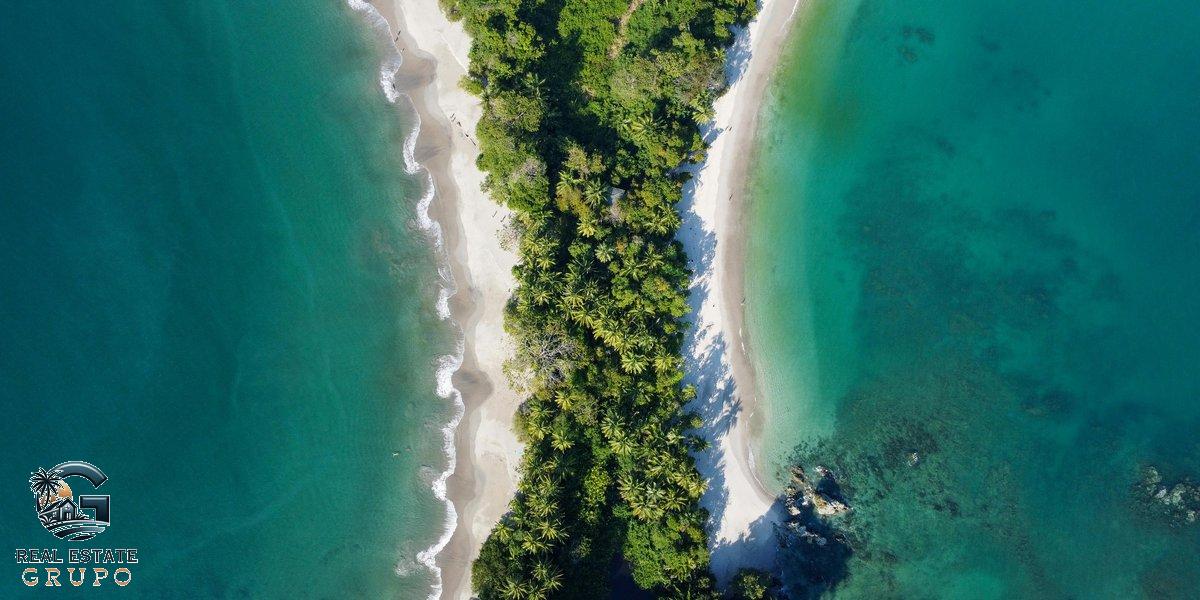
This is the question that trips up more buyers than any other. In Costa Rica’s Maritime Terrestrial Zone (the first 200 meters from the high-tide line on most ocean-front land), private ownership title doesn’t exist. Instead, the government owns the land and grants concessions, managed through municipalities and overseen by the Instituto Costarricense de Turismo (ICT). A concession is a right to use, not a deed to own.
Concession properties in places like Guanacaste’s Papagayo zone, the Osa Peninsula beaches, and parts of the Caribbean coast are common and perfectly legal to hold, but the verification process is completely different. You’re checking the concession file at the municipality and ICT, not just the Registro Nacional. Foreigners who haven’t been legal residents for at least five years also face restrictions on holding concessions directly.
| Feature | Titled Property | Concession Land |
|---|---|---|
| Ownership type | Full private title | Right to use, government owns land |
| Where to verify | Registro Nacional | Municipality + ICT |
| Foreigners can hold? | Yes, same rights as nationals | Restricted without 5-year residency (direct) |
| Common locations | Central Valley, inland areas, some coastal | Beachfront within 200m of high tide |
| Can be mortgaged? | Yes | Generally no, with limited exceptions |
How do you check for back taxes and municipal fees?
Property taxes in Costa Rica are paid to the municipality where the property sits, not to a national body. The rate is low by US standards, a fraction of a percent of the assessed value annually. But unpaid taxes can attach to the property and become the new buyer’s problem. Ask the seller for a paz y salvo municipal, a certificate confirming all municipal taxes and fees are current.
You can also check national tax status through Ministerio de Hacienda. If the property is held inside an SA, that company has its own annual tax obligations (impuesto a las personas jurídicas). An SA that’s in bad standing can complicate or delay a transfer. Your attorney checks this, but you can ask for proof before signing anything.
Do you still need a Costa Rican attorney?
Yes. Running the registry search yourself is smart due diligence and we encourage it. But the actual transfer of title in Costa Rica must go through a licensed Costa Rican attorney (notario público), who is both a notary and a lawyer. Only a notary can execute the deed (escritura pública) and register it. This isn’t optional.
Choose your own attorney, not one recommended exclusively by the seller or listing agent. Independent legal advice costs money, but it’s the single best money you’ll spend in the whole transaction. Attorney fees for property transactions in Costa Rica are regulated and calculated on a sliding scale based on the property’s value, so you’ll know the cost upfront.
What does a title search attorney actually check?
A thorough attorney goes beyond the basic registry extract. They check for anotaciones preventivas (pending legal annotations that haven’t been finalized yet), confirm boundary surveys match what’s in the registry, verify there are no easements (servidumbres) or rights of way that could affect your use, and confirm the property isn’t inside any protected area or restricted zone. For properties listed in our inventory, we’ve already done a preliminary review, but your independent attorney still does their own check.
Can you verify a Costa Rica property from the US or Canada before traveling?
Yes, completely. The Registro Nacional is online and accessible from anywhere. You don’t need to be in the country to pull a certificación. Many buyers we work with do their registry review from home, then visit in person only for properties that cleared the first filter. That’s a smart use of your time.
If you’d rather not navigate the Spanish-language registry yourself, our free Property Check tool pulls the official data and gives you a plain-English summary. You’ll see ownership, encumbrances, and basic legal status without decoding legal Spanish. It’s a starting point, not a substitute for attorney review, but it’s a solid first filter before you spend more time or money on a property.
Frequently Asked Questions
How long does a property title search take in Costa Rica?
A basic Registro Nacional search takes minutes once you have the folio real. A full attorney-conducted title search, including boundary verification, zoning review, and corporate standing checks, typically takes one to two weeks depending on the complexity of the property and municipality involved.
Can a foreigner own property outright in Costa Rica?
Yes. For fully titled land, foreigners have the same ownership rights as Costa Rican nationals. You can hold title in your own name or through a Costa Rican corporation. The exception is concession land in the Maritime Terrestrial Zone, where direct holding by foreigners who haven’t been residents for at least five years is restricted.
What is a folio real and where do I find it?
The folio real is the unique identification number for a titled property in Costa Rica’s national registry. Ask the seller or listing agent for it directly. It should also appear on any formal property listing sheet. If it’s not available, that’s a red flag worth taking seriously before you go further.
What happens if there’s a lien on the property I want to buy?
A lien (gravamen) recorded against the property must be resolved before or at closing. In most cases, the seller pays off the lien from the sale proceeds at the time of transfer. Your attorney will hold funds in trust or structure the closing to ensure the lien is cleared simultaneously with the title transfer. Never close with an unresolved lien expecting to sort it out afterward.
Is a survey required to buy property in Costa Rica?
A survey (plano catastrado) is registered with the Registro Nacional for most titled properties. Your attorney will confirm the survey on file matches the current boundaries and what’s being sold. For older properties or those with recent boundary changes, a new survey by a licensed Costa Rican topographer may be recommended. Don’t skip this for rural land or large parcels.
Before you wire a deposit, verify the property. Folio pulls official registry data into one clear report. Or message Leo on WhatsApp at +506 8798 6122.
Browse current Costa Rica listings
These are properties we are working with right now. New ones get added often, so check back, or message us for off-market options that never hit the public site.

Blooma Hotel — Boutique Hospitality Asset, Santa Teresa
Santa Teresa Beach, Puntarenas Province, Puntarenas, Costa Rica
Fire Sale — Prime Santa Teresa Lot
Puntarenas Province, Santa Teresa, Costa Rica
Opportunity above Montezuma
MW66+W9R Puntarenas Province, Delicias, Costa Rica
Private Villa Compound with Expansion Potential — Playa Hermosa
Puntarenas Province, Playa Hermosa, Costa Rica
Villa Malpaís — 4-Bedroom Turn-Key Estate
Mal País, Cóbano, Puntarenas, Costa Rica
Turnkey 4BR Income Estate with Ocean Views — Playa Hermosa
Puntarenas Province, Playa Hermosa, Costa RicaOn the ground in Costa Rica, helping US and Canadian buyers find and safely close the right property. Questions? Message Leo on WhatsApp at +506 8798 6122.


Join The Discussion