 English
 Español
 Français
 עברית
 Português


Remote property due diligence in Costa Rica is entirely possible, and buyers who follow a clear process protect themselves just as well as those who fly down to walk the land. The key difference between a safe remote purchase and a costly mistake is knowing which official sources to check, which professionals to hire locally, and in what order to do it. Costa Rica’s property registry is public and digital, which means a lot of the foundational research can happen from your kitchen table in Ohio or Ontario before you ever book a flight. That said, there are a handful of Costa Rica-specific issues, like maritime zone status, servitude rights, and untitled land, that will trip you up if you skip steps or rely on seller-provided documents alone.
- Costa Rica’s national registry is public and searchable online, giving you direct access to ownership history, liens, and boundary maps remotely.
- Maritime zone properties (within 200 meters of the ocean) follow a completely different legal framework and require extra verification steps.
- Hire a Costa Rican attorney independently, meaning not one referred by the seller, to review title and draft or review any purchase agreement.
- A property check tool like Folio pulls registry data into a single readable report in minutes, a smart first step before spending money on anything else.
What does remote property due diligence in Costa Rica actually involve?
Due diligence here covers four main pillars: title verification, boundary and survey confirmation, legal encumbrances, and zoning or use restrictions. Each one has a remote-friendly path. None of them should be skipped, even if the seller is in a hurry or the deal looks obvious on paper.
Title verification means confirming who legally owns the property, through the Registro Nacional (Costa Rica’s National Registry), and checking the chain of ownership going back at least ten years. Encumbrances include mortgages, liens, annotations, and easements registered against the finca number. That finca number is the unique identifier every titled property in Costa Rica carries, and it’s the first thing you ask a seller to provide.
How do you verify a Costa Rica property title from outside the country?
Start by getting the finca number from the seller. This is not optional. Without the finca, you can’t look anything up independently, and a seller who hesitates to provide it is a red flag worth taking seriously.
Once you have the finca, run a property check through Folio, whose $29 report pulls the official Registro Nacional data and organizes it clearly for buyers who don’t read Spanish legal documents. You’ll see the registered owner, any recorded liens or mortgages, the cadastral plan number (plano catastrado, which is the official surveyed boundary map), and whether the property is flagged for maritime zone status. That report gives you a fast, clear baseline before you spend money on attorneys or travel.
Your Costa Rican attorney will then do a deeper formal title study, tracing the chain of ownership and checking for any annotations that might not be immediately obvious. This formal opinion is what protects you legally and it’s what triggers the closing process.
What is the maritime zone and why does it matter for remote buyers?
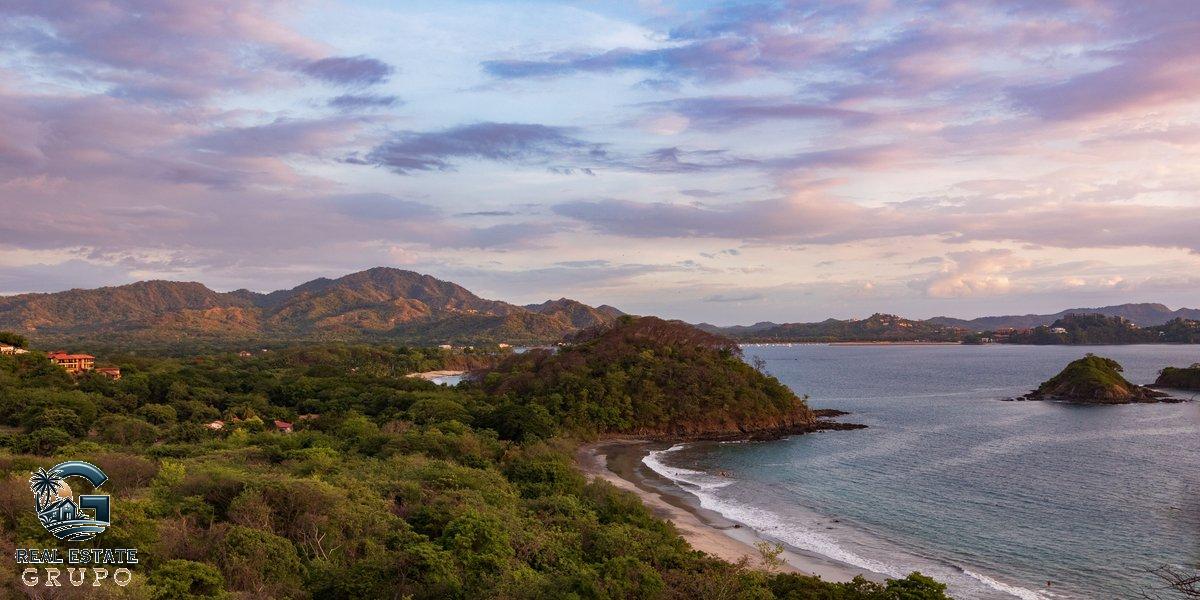
The maritime zone (zona marítimo terrestre) covers the first 200 meters inland from the high-tide line along Costa Rica’s coasts. The first 50 meters are public land and cannot be privately owned by anyone. The next 150 meters are concession land, meaning you don’t get a title deed, you get a government concession, similar to a long-term lease granted by the municipality.
Foreigners who have not been legal residents for at least five years cannot hold a concession directly in their own name. This is one of the most misunderstood rules in Costa Rica real estate, and it catches remote buyers by surprise constantly. The fix is usually holding the concession through a Costa Rican corporation (sociedad anónima, or S.A.), but the structure needs to be set up correctly and the concession needs to be active and in good standing with the municipality.
Check with the Instituto Costarricense de Turismo (ICT) for maritime zone regulations and confirm the concession status directly with the relevant municipality before moving forward on any beachfront or near-beach property. A Folio check will flag if a property carries maritime zone status, which is the signal to dig deeper immediately.
How do you check the boundary survey (plano catastrado) remotely?
The plano catastrado is the official surveyed boundary map filed with the Catastro Nacional, part of the Registro Nacional. Every titled property should have one. You cross-reference the plano number shown in the title with the actual cadastral record to confirm they match and that the boundaries haven’t shifted or been disputed.
Discrepancies between the registered plano and what’s on the ground happen more often than buyers expect, especially in rural areas where land was subdivided informally over decades. If the registered square meters don’t match what the seller is describing, that needs to be resolved before you close, not after.
For a remote review, your attorney can pull the plano and overlay it against satellite imagery, and for any significant purchase you should hire a licensed topographer (topógrafo) to do a physical boundary survey. That survey cost is modest compared to the risk of discovering a fence or a building sits on a neighbor’s land after you’ve closed.
What role does a Costa Rica attorney play in remote due diligence?
In Costa Rica, only a licensed notary-attorney (notario público) can execute a deed (escritura). That makes your attorney both the legal reviewer and the person who prepares and registers the transfer deed. They’re not optional, and they’re not interchangeable with a US or Canadian real estate attorney who has no Costa Rican bar license.
Your attorney will issue a formal title study, review or draft the purchase option agreement (opción de compra), handle the escrow instructions, calculate transfer taxes, and register the deed with the Registro Nacional after closing. For a remote transaction, much of this can be handled by email and video call. You will need to sign a power of attorney (poder especial) if you cannot be physically present at closing, which is common for remote buyers.
Closing costs in Costa Rica include transfer taxes, stamp duties, notary fees, and registry fees. These are not small numbers. Use our Costa Rica closing costs calculator to get a realistic picture of what you’ll owe at the table, so there are no surprises on closing day.
How do you assess zoning, permits, and environmental restrictions remotely?
Costa Rica has active environmental oversight, and building permits or land-use restrictions can significantly affect what you can do with a property. The Uso de Suelo (land use permit) from the municipality tells you what type of construction or activity is legally allowed on a given parcel. If you’re buying to build or develop, this is non-negotiable to verify before committing.
Environmental impact assessments are managed by SETENA, and any project near wetlands, forests, or protected areas may require a SETENA viability before construction begins. Your attorney or a local permitting consultant can request these remotely and report back to you.
For income-producing properties, make sure existing structures have their construction permits (permisos de construcción) in order. A house built without permits can complicate resale, financing, and insurance down the road. Ask for permit documentation early in your negotiation, not the day before closing.
How do you evaluate the property itself without being there?
Virtual tours, drone footage, and video walkthroughs have become standard practice. Ask the listing agent or seller for a live video call walk-through so you can ask questions in real time. Pay attention to water source (municipal water vs. well), septic vs. sewer, internet availability, and road access, these infrastructure details vary dramatically across different areas and affect both livability and rental potential.
Hire a local home inspector (perito) for a physical inspection report with photos. This is separate from your attorney’s legal review. A good inspector covers structural integrity, roof condition, electrical systems, plumbing, and signs of water intrusion. You get the report remotely and can follow up with questions.
If you’re buying as an investment and plan to rent the property, run our rental ROI calculator with conservative occupancy assumptions for the specific area. Rental performance in the Central Valley is very different from the Guanacaste coast or the Southern Zone, and a tool built for Costa Rica gives you a more grounded starting point than generic spreadsheet math.
Is owner financing an option for remote buyers?
Yes, and it’s more common in Costa Rica than most US buyers expect. Seller financing (financiamiento del vendedor) can work well for properties that don’t qualify for traditional bank financing, or for buyers who want to close quickly without dealing with a Costa Rican mortgage process. The terms, interest rate, loan period, and default conditions all need to be formalized in the deed by your notary-attorney.
If you’re exploring this route, use the owner financing calculator to model different scenarios before you sit down to negotiate with a seller. Walking into that conversation with your numbers already worked out gives you a real edge.
| Due Diligence Step | Can Be Done Remotely? | Who Does It |
|---|---|---|
| Finca and title check | Yes | Buyer via Folio, then attorney |
| Formal title study | Yes | Costa Rican attorney |
| Boundary survey (plano) | Partial (topógrafo needed on site) | Licensed topographer |
| Maritime zone status | Yes | Folio check + attorney + municipality |
| Home inspection | Partial (report delivered remotely) | Local perito (inspector) |
| Zoning and use permits | Yes | Attorney or permitting consultant |
| Construction permits | Yes | Attorney verifies with municipality |
Frequently Asked Questions
Can a foreigner legally buy property in Costa Rica without visiting in person?
Yes. Foreigners have the same property ownership rights as Costa Rican citizens for titled land. You can complete a purchase remotely using a power of attorney (poder especial), which authorizes your attorney to sign the deed on your behalf at closing. Notarization and apostille requirements for the power of attorney depend on where you sign it, so ask your attorney early in the process.
How long does property due diligence typically take in Costa Rica?
A formal title study usually takes one to two weeks. If there are complications, like a lien that needs to be released, a boundary dispute, or a maritime zone issue to resolve, it can take longer. Build at least three to four weeks of due diligence time into any purchase timeline before you expect to close.
What is a finca number and where do I find it?
The finca is the unique registry number assigned to every titled property in Costa Rica, similar to a parcel ID in the US. It appears in the title deed and in the Registro Nacional database. Ask the seller or listing agent for the finca number as your first step. If they can’t or won’t provide it, that’s a serious warning sign.
Are there annual property taxes in Costa Rica?
Yes. The property tax (impuesto sobre bienes inmuebles) is assessed annually at a low rate on the declared value of the property, collected by the municipality. There is also a luxury home tax (impuesto solidario) that applies to residential properties above a certain declared construction value, administered by Ministerio de Hacienda. Your attorney can tell you whether a specific property is subject to it.
What’s the biggest mistake remote buyers make in Costa Rica?
Skipping the independent title check and relying on documents provided by the seller. The Registro Nacional is public for a reason. Any buyer, or their attorney, can verify ownership and liens directly. The second most common mistake is not clarifying maritime zone status before falling in love with a beachfront property, because the legal structure for concession land is meaningfully different from titled land and not every buyer is prepared for it.
You can also browse current listings across Costa Rica’s most active buyer markets, or reach the REG team directly if you have questions about a specific property or region before you start the due diligence process.
Before you wire a deposit, check the property first. Run a free scan on Folio. Tap the lot to see its finca number, lot area, boundary and maritime-zone flag in seconds. Folio’s $29 report adds the registered owner, liens and the plano, usually within 24 hours. Then message Leo on WhatsApp at +506 8798 6122 when you are ready to move on a deal.
Browse current Costa Rica listings
These are properties we are working with right now. New ones get added often, so check back, or message us for off-market options that never hit the public site.

5 bedrooms / 5 bathrooms
Puntarenas Province, Santa Teresa, Costa Rica
CASA CEDRO | MAL PAIS
Puntarenas Province, Santa Teresa, Costa Rica
CASA MAREA with $400,000 down
Malpais, Puntarenas Province, Costa Rica
San Isidro Cóbano
Puntarenas Province, Santa Teresa, Costa Rica
Beachfront Villa in Playa Mal País
Puntarenas Province, Santa Teresa, Costa Rica
heart of Santa Teresa
Puntarenas Province, Santa Teresa, Costa RicaOn the ground in Costa Rica, helping US and Canadian buyers find and safely close the right property. Questions? Message Leo on WhatsApp at +506 8798 6122.


Join The Discussion