 English
 Español
 Français
 עברית
 Português


To check property in Dominical and Uvita, you need to verify four things before any money moves: who legally owns it, whether the title is clean at the Registro Nacional, whether the land sits inside the maritime zone, and whether any liens or annotations are attached to the finca (the official property file). This coastal stretch of the South Pacific is one of the most talked-about corridors in Costa Rica right now, and it attracts serious buyers. But it also has some of the most complex title situations in the country, especially around Playa Dominical, Playa Hermosa, and the hills above Uvita. Get this part right and you can move confidently. Skip it and you could be buying someone else’s problem.
- Always confirm the finca number and run a full title check before signing anything or wiring a deposit.
- Much of the beachfront in Dominical and Uvita sits inside the Maritime Zone (Zona Marítimo Terrestre), where private ownership is not possible, only concessions.
- Liens, mortgages, and court annotations in Costa Rica follow the land, not the seller. A clean-looking deal can carry hidden debt.
- Hire a local attorney independent of the seller and use a tool like Folio to pull official registry data before you commit.
Why checking property in Dominical and Uvita is more complicated than other areas
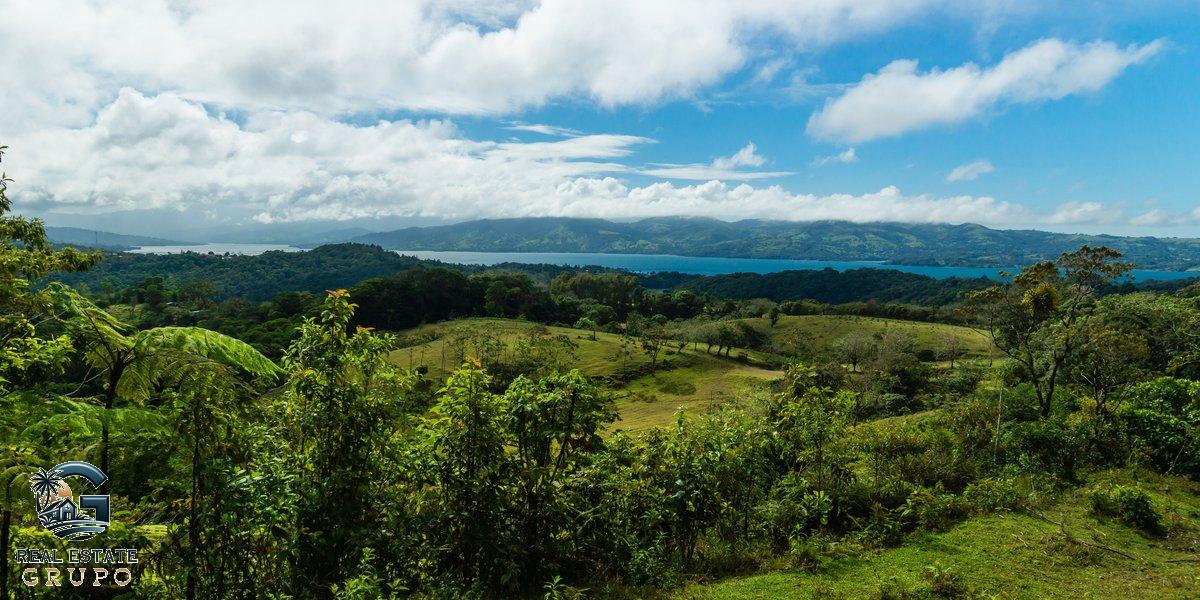
Most buyers come down here expecting the process to be similar to buying in Tamarindo or Escazu. It’s not. The Dominical-Uvita corridor, also called the Zona Sur Pacífico, has a mix of titled land, concession land, and untitled land that can sit right next to each other with no obvious boundary on the ground. Two lots that look identical on a seller’s map can have completely different legal situations.
The Maritime Zone Law (Ley de la Zona Marítimo Terrestre) designates the first 200 meters from the mean high-tide line as a public zone or concession zone. The first 50 meters are fully public, meaning no one can own or concession them. The next 150 meters can be granted as a concession by the local municipality, in this case the Municipalidad de Osa. If a seller is offering you “beachfront” in Dominical without mentioning a concession, that’s the first red flag.
How to check property in Dominical and Uvita: the step-by-step process
Step 1: Get the finca number and plano catastrado
Every titled property in Costa Rica has a finca number, its unique ID in the Registro Nacional. The plano catastrado is the surveyor’s map registered to that finca. Ask the seller or their agent for both before anything else. If they can’t provide them quickly, that tells you something.
With the finca number, you can run a property check through Folio to find the parcel free, then order its $29 report for the official title record, current ownership, any registered liens or mortgages, and legal annotations. The map takes minutes and costs nothing; the report arrives within 24 hours. Do it before you visit a second time, and definitely before you sign a letter of intent or an option agreement.
Step 2: Confirm who holds legal title right now
Costa Rica has a well-organized public registry, and that’s good news. Ownership transfers are recorded there, not just in a file at a notary’s office. What you’re checking is whether the person or entity offering to sell you the property actually appears as the registered owner today. Sometimes properties are sold through corporations (sociedades anonimas, or S.A.s), and the shares can change hands without the property itself being re-registered. Your attorney needs to check both the property record and the corporation record.
Step 3: Check for liens, mortgages, and annotations
In Costa Rica, registered debt follows the property. If the previous owner took out a mortgage and it wasn’t discharged before the sale, you could inherit that obligation. The same is true for court-ordered annotations (anotaciones), which often signal a lawsuit, a boundary dispute, or a debt judgment that has attached itself to the land. These all show up in the registry when you order Folio’s $29 title report or have your attorney pull the certification.
Dominical and Uvita have seen a lot of land-value appreciation, which means some older properties carry annotations from legal disputes that have never been fully resolved. Don’t assume they’re old and harmless. Have your attorney assess each one.
Step 4: Verify maritime zone status
This is the one that trips up more foreign buyers in this corridor than anything else. If the property is within 200 meters of the ocean, you need to know exactly where it falls. Your attorney should request a maritime zone certification from the Municipalidad de Osa and cross-reference it with the ICT (Instituto Costarricense de Turismo), which has regulatory oversight of the maritime zone development plans (planes reguladores).
| Zone | Distance from high tide | Can foreigners own or hold? |
|---|---|---|
| Public Zone | 0 to 50 meters | No. Fully public. No ownership or concession. |
| Restricted Zone | 50 to 200 meters | Concession only (not fee-simple title). Foreigners with less than 5 years residency cannot hold a concession directly. |
| Titled Land | Beyond 200 meters (and some grandfathered exceptions) | Yes, full titled ownership available to anyone. |
If a property is being offered as a concession, you need to review the concession document carefully: its term, the annual canon (fee paid to the municipality), whether it’s current on payments, and whether it’s been approved under a valid maritime zone development plan. A concession that isn’t backed by an approved plan is extremely difficult to transfer or develop legally.
Step 5: Check environmental permits and land use
Dominical and Uvita sit near protected areas, rivers, wetlands, and biological corridors. SETENA (the environmental technical secretariat) is the agency that reviews and approves environmental impact assessments. If you’re buying land with the intent to build, you need to confirm that the land use (uso de suelo) allows your planned project and that no environmental restrictions block construction. A lot in a biological corridor or near a protected river bank may have severe building limitations that aren’t obvious from a title check alone.
Titled vs. concession property in Dominical and Uvita: which is better?

Buyers often ask this. Titled land (fee-simple, registered in the Registro Nacional) gives you the strongest legal footing. You can finance it, leave it in your estate, sell it freely, and build on it subject to permits. Concession land gives you the right to use and develop a property within the maritime zone for a defined term, but it can be revoked if rules are broken, it can’t be mortgaged the same way, and foreigners face residency requirements to hold it directly.
That said, some of the most desirable lots in this area are concessions, and many buyers hold them successfully through Costa Rican corporations or after establishing residency. The key is knowing exactly what you’re buying before you close. You can browse our current listings in Dominical and Uvita to see how each property is classified.
What does a good attorney do in this process?
Your attorney should be independent, meaning not referred by the seller or the developer. In Costa Rica, both buyer and seller can technically use the same notary to close a transaction, but as a buyer you want someone whose loyalty is only to you. A competent local attorney will pull the full chain of title (not just the most recent deed), check the corporation registry if the property is held in an S.A., verify the concession file at the municipality if applicable, and review any SETENA resolutions tied to the land.
Closing costs in Costa Rica are real and worth planning for. Use the free Costa Rica closing costs calculator to estimate what you’ll pay at the table. If you’re exploring owner financing as part of your deal, the owner financing calculator is also worth running before you negotiate terms.
Frequently Asked Questions
Can a foreigner own property outright in Dominical and Uvita?
Yes, foreigners have the same property rights as Costa Rican citizens for titled land. There are no restrictions on foreign ownership of fee-simple (titled) property. The exception is maritime zone concessions, where foreigners without legal residency of at least five years cannot hold a concession in their own name and typically use a Costa Rican corporation instead.
How do I find out if a property is in the maritime zone?
You need a maritime zone certification from the Municipalidad de Osa, combined with a boundary survey (plano catastrado) that shows the property’s location relative to the mean high-tide line. Your attorney coordinates this. A quick initial check through Folio can flag whether a property has concession status in the registry, which is a fast first signal.
What is a finca number and how do I use it?
A finca number is the unique identifier assigned to every titled property in Costa Rica’s national registry. It usually looks like a province number followed by a sequential number (for example, Puntarenas-123456-000). With the finca number, your attorney or Folio’s $29 report can pull the full title record, including current owner, legal description, registered area, liens, and annotations.
Are there property taxes I should know about before buying?
Yes. Costa Rica charges an annual property tax (impuesto sobre bienes inmuebles) based on the declared value of the property, administered by the municipality. There is also a luxury home tax (impuesto solidario) that applies to residential properties above a certain declared value. Your attorney and the team at Ministerio de Hacienda can clarify current thresholds and obligations. Confirm that the seller’s tax accounts are current before closing.
How long does due diligence typically take in this area?
For a straightforward titled property with no maritime zone issues, a thorough due diligence period runs roughly 30 to 45 days. If concession status, SETENA permits, or boundary disputes are involved, plan for longer. Don’t let a seller pressure you into a shorter window. Good deals don’t disappear because you took the time to verify what you’re buying.
Before you wire a deposit, check the property first. Run a free scan on Folio. Tap the lot to see its finca number, lot area, boundary and maritime-zone flag in seconds. Folio’s $29 report adds the registered owner, liens and the plano, usually within 24 hours. Then message Leo on WhatsApp at +506 8988 5372 when you are ready to move on a deal.
Browse current Costa Rica listings
These are properties we are working with right now. New ones get added often, so check back, or message us for off-market options that never hit the public site.

5 bedrooms / 5 bathrooms
Puntarenas Province, Santa Teresa, Costa Rica
CASA CEDRO | MAL PAIS
Puntarenas Province, Santa Teresa, Costa Rica
CASA MAREA with $400,000 down
Malpais, Puntarenas Province, Costa Rica
San Isidro Cóbano
Puntarenas Province, Santa Teresa, Costa Rica
Beachfront Villa in Playa Mal País
Puntarenas Province, Santa Teresa, Costa Rica
heart of Santa Teresa
Puntarenas Province, Santa Teresa, Costa RicaOn the ground in Costa Rica, helping US and Canadian buyers find and safely close the right property. Questions? Message Leo on WhatsApp at +506 8988 5372.


Join The Discussion