 English
 Español
 Français
 עברית
עברית Português

Santa teresa costa rica real estate has quietly become one of the most searched markets on the entire Pacific coast, and for good reason. The combination of consistent surf, a genuinely walkable beach town vibe, and strong short-term rental demand has pulled in buyers from California, Texas, British Columbia, and beyond. Prices have moved meaningfully over the past several years, yet compared to comparable beach markets in Mexico or Panama, Santa Teresa still offers real value, especially if you know which neighborhoods to target and which land classifications to avoid. This guide lays out exactly what you need to know before making an offer in 2026.
- Santa Teresa sits on the Nicoya Peninsula, and most of its beachfront land falls under Maritime Zone (Zona Maritima) concession law, not fee-simple titled ownership.
- Titled properties set back from the beach can be owned outright by foreigners with the same rights as Costa Rican citizens.
- Short-term rental income is real here, but occupancy varies by season and property type, so underwrite conservatively.
- Always verify title and concession status through the free parcel map and a $29 Folio title report before you put money down.
Where exactly is Santa Teresa, and what does the market look like in 2026?

Santa Teresa is on the southern tip of the Nicoya Peninsula, in the Puntarenas province. Getting here still requires either a ferry crossing from Puntarenas city to Paquera, followed by a roughly one-hour drive, or a short domestic flight into Tambor airport. That relative friction is actually a feature for investors: it filters the market and keeps the town from feeling like a resort corridor.
The “Santa Teresa market” is really three micro-markets stacked along one road: Playa Carmen at the southern end (more commercial, closer to restaurants and shops), Santa Teresa proper in the middle (the surf beach, the density of vacation rentals), and Mal Pais to the north (quieter, a bit more raw, popular with buyers who want larger lots). Knowing which zone you’re buying in changes the math on everything from rental yield to resale liquidity.
Buyer demand in 2026 continues to skew toward turnkey homes and well-permitted casitas (small houses) with pools. Raw land still sells, but buyers are more cautious now than they were a few years ago, partly because construction costs on the peninsula have risen and project timelines can stretch.
What types of property titles exist in Santa Teresa costa rica real estate?
This is the single most important thing to understand before you buy in Santa Teresa. Not all property here is the same legally, and the distinction can be the difference between a clean investment and an expensive headache.
| Property Type | Ownership | Can Foreigners Own? | Key Risk |
|---|---|---|---|
| Titled (Escritura) | Fee-simple, registered at Registro Nacional | Yes, same rights as citizens | Lowest risk if title is clean |
| Maritime Zone Concession (Zona Maritima) | Government-granted concession, not owned outright | Only if you have 5+ years residency OR through a Costa Rican partner/company | Concession can expire or not renew |
| Occupation Land (Precario) | No formal title, squatter-style claim | Not recommended | Very high legal and financial risk |
The Maritime Zone law, administered with oversight from the Instituto Costarricense de Turismo (ICT), establishes that the first 50 meters from the high-tide line is public land, and the next 150 meters is the concession zone. If a property is inside that 200-meter band, you’re dealing with concession law, period. Sellers sometimes present concession properties in ways that obscure this, so never assume. Check the folio real (property registry number) yourself.
What do properties actually cost in Santa Teresa right now?
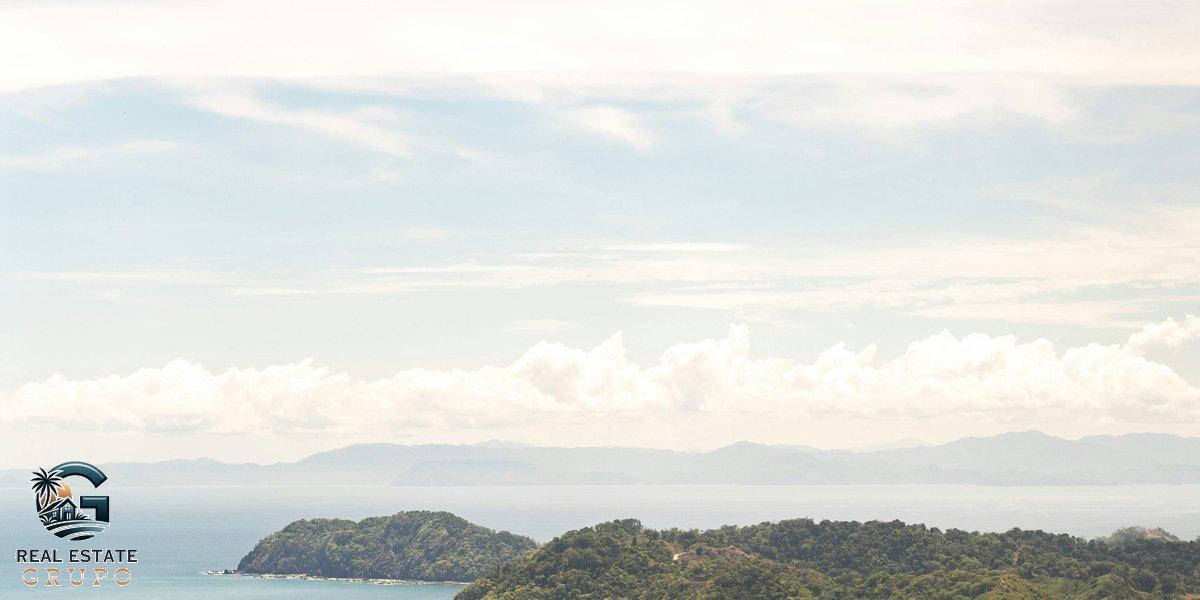
Prices in Santa Teresa span a wide range, and quoting a single “average” would mislead you. Entry-level is real: you can still find small, older casitas on legitimate titled lots at prices that feel manageable for North American buyers. On the other end, new-build luxury homes with infinity pools and ocean views are listed well into the millions of dollars.
Lots are priced per square meter, and location relative to the beach, the main road (Calle Principal), and the surf break matters enormously. A titled lot a short walk from the water in Santa Teresa proper commands a meaningfully higher price per square meter than a similarly sized lot in the hills above Mal Pais, even if the hill lot has better views. Rental demand, not just views, drives value here.
Construction costs on the peninsula have climbed. Materials have to be trucked in, skilled labor is in demand, and project management from a distance is genuinely hard. If you’re buying land to build, budget conservatively and plan for longer timelines than a contractor’s initial quote suggests.
Is Santa Teresa a good place for rental investment?
Honestly, yes, with caveats. Santa Teresa has one of the more reliable short-term rental ecosystems on the Pacific coast because the surf is consistent year-round. High season runs roughly from late November through April, when North American and European visitors arrive in volume. The green season (May through November) still brings surfers and adventure travelers, though occupancy dips and nightly rates soften.
The properties that perform best as rentals are not always the most expensive ones. A well-managed 2-bedroom home with a private pool, fast wifi, and air conditioning in the bedrooms will outperform a poorly managed 4-bedroom villa every time. Property management fees on the peninsula typically run in the 20-30% range of gross rental revenue, which is real money and needs to be in your proforma from day one.
What are the biggest mistakes buyers make in Santa Teresa?
The most common mistake we see at Real Estate Grupo is buyers falling in love with a property before verifying the title and concession status. Santa Teresa is charismatic. The surf, the town, the food, the energy, it can make people move fast. Moving fast on real estate in Costa Rica without legal verification is how you end up owning a property you can’t legally rent or resell cleanly.
The second mistake is underestimating carrying costs. Property taxes in Costa Rica (impuesto sobre bienes inmuebles) are generally low by North American standards, but you also have corporate taxes if you hold the property in a sociedad anonima (S.A., the standard legal entity used for property ownership), plus utilities, property management, and maintenance. Roads in Santa Teresa are still rough in places, and properties close to the ocean need more maintenance than inland homes because of salt air and humidity.
The third mistake is skipping local legal counsel. Costa Rica has its own property law, its own registry system at the Registro Nacional, and its own closing process. A Costa Rican attorney (abogado) who specializes in real estate is not optional. This is not a market where you use a general practice lawyer or, worse, rely on the seller’s attorney to represent your interests.
How does the buying process work for US and Canadian buyers?
Foreigners can own titled real estate in Costa Rica with the same rights as citizens. There’s no restriction on foreign ownership of titled property, no requirement to be a resident, and no cap on the number of properties you can own. The process is more straightforward than many buyers expect.
Here’s a simplified version of how a typical purchase flows. You identify a property and make an offer. If accepted, both parties sign a purchase-sale promise contract (promesa de compraventa), usually accompanied by a 10% deposit held in escrow. Your attorney conducts due diligence on the title, surveys, permits, and any environmental considerations (SETENA, the environmental permitting agency, matters if the property touches protected land or wetlands). Closing happens before a Costa Rican notary public, the deed transfers at the Registro Nacional, and you wire the balance through escrow. The whole process from accepted offer to closing typically takes 30 to 60 days for a clean titled property, longer if there are complications.
Financing from Costa Rican banks is available to foreigners but involves more paperwork and typically higher interest rates than what you’re used to in the US or Canada. Most foreign buyers pay cash or arrange financing from their home country against existing assets.
Which neighborhoods in Santa Teresa should buyers focus on?
Playa Carmen is where you want to be if rental yield is your priority. It’s the most walkable part of the greater Santa Teresa area, with direct access to the surf break, restaurants, and the small commercial strip. Properties here are priced at a premium, but occupancy tends to be stronger year-round because guests can actually walk to things.
Santa Teresa proper, running north from Playa Carmen along the main road, offers a mix of established vacation rentals and newer builds. The surf beach here is the main draw, and properties within a few hundred meters of the beach hold value well. This is the neighborhood most people picture when they think of Santa Teresa.
Mal Pais, further north, attracts buyers who want more land, more privacy, and a slower pace. It’s genuinely beautiful and less crowded, but rental demand is softer because guests have to drive or ride to get anywhere. For a personal-use property or a retreat, Mal Pais makes a lot of sense. For a pure short-term rental investment, it’s a harder case to make.
You can browse current Santa Teresa listings to get a feel for what’s available across these neighborhoods right now, including price points and property types that are actually on the market.
Frequently Asked Questions
Can a US or Canadian citizen own property in Santa Teresa outright?
Yes. Foreigners have the same property ownership rights as Costa Rican citizens for titled (fee-simple) properties. The exception is Maritime Zone concession land, where foreigners need five or more years of legal residency, or must hold the concession through a Costa Rican partner or properly structured company. Always confirm which type of land you’re looking at before you buy.
Do I need to be a Costa Rica resident to buy real estate in Santa Teresa?
No residency is required to purchase titled real estate. You can buy, own, and sell property in Costa Rica as a non-resident foreigner. Residency only becomes relevant if you want to hold a Maritime Zone concession directly in your name.
How much are property taxes in Costa Rica?
Costa Rica’s annual property tax (impuesto sobre bienes inmuebles) is generally a fraction of a percent of the declared property value, which is low by North American standards. The declared value is set through the municipal assessment process, and properties are sometimes assessed below market value. Your attorney or accountant can walk you through current obligations, including any luxury home tax (impuesto solidario) that applies to higher-value properties. Tax information is administered through the Ministerio de Hacienda.
What is the Zona Maritima and does it affect Santa Teresa properties?
The Maritime Zone (Zona Maritima) is a 200-meter strip running along Costa Rica’s coastline. The first 50 meters from the high-tide line is fully public. The next 150 meters is the concession zone, where land is owned by the state and use rights are granted via concession permits. Many beachfront and ocean-view properties in Santa Teresa fall within this zone, which means you’re buying a concession, not a title. This is not necessarily a dealbreaker, but it changes the legal structure significantly and requires careful due diligence.
How do I verify a property’s title before buying in Santa Teresa?
Start with the folio real, the registry number that identifies the property in the Registro Nacional. You or your attorney can search this at the official Registro Nacional database to see ownership history, encumbrances, liens, and whether the land is titled or concession. You can also use the free parcel map as a fast first step before engaging a full legal review. Never skip this part of the process, regardless of how clean a property looks on the surface.
Is Santa Teresa still growing, or has the market peaked?
Santa Teresa has matured significantly from its early days as a backpacker surf town, but calling it peaked would be premature. Infrastructure improvements on the Nicoya Peninsula, ongoing interest from remote workers and digital nomads, and limited land supply close to the beach continue to support values. That said, this is not a market where you can buy anything and expect appreciation. Location quality, title clarity, and rental-readiness matter more now than they did five years ago. Talk to the team for a current read on specific neighborhoods and property types.
See current listings in Santa Teresa or message Leo directly on WhatsApp at +506 8798 6122.
Browse current Costa Rica listings
These are properties we are working with right now. New ones get added often, so check back, or message us for off-market options that never hit the public site.

5 bedrooms / 5 bathrooms
Puntarenas Province, Santa Teresa, Costa Rica
CASA CEDRO | MAL PAIS
Puntarenas Province, Santa Teresa, Costa Rica
San Isidro Cóbano
Puntarenas Province, Santa Teresa, Costa Rica
Beachfront Villa in Playa Mal País
Puntarenas Province, Santa Teresa, Costa Rica
heart of Santa Teresa
Puntarenas Province, Santa Teresa, Costa Rica
Rare $400k Central Santa Teresa
Puntarenas Province, Santa Teresa, Costa RicaOn the ground in Costa Rica, helping US and Canadian buyers find and safely close the right property. Questions? Message Leo on WhatsApp at +506 8798 6122.


Join The Discussion