 English
 Español
 Français
 עברית
עברית Português

The mal pais vs santa teresa question comes up constantly with buyers who’ve fallen for the southern Nicoya Peninsula and can’t quite figure out where one village ends and the other begins. Here’s the honest answer: they’re essentially the same strip of coastline, running roughly north to south along Costa Rica’s Pacific coast, but they attract different buyers and carry different price points. Santa Teresa sits to the north, closer to the main commercial drag, surf schools, and restaurants. Mal Pais is quieter, a touch more rugged, and draws buyers who want distance from the crowds. Choosing between them isn’t really about one being better. It’s about which version of life you’re buying into.
- Santa Teresa and Mal Pais share a single road, but they feel noticeably different in energy and development density.
- Santa Teresa commands higher prices and stronger short-term rental demand because of its commercial activity and surf culture.
- Mal Pais appeals to buyers who want seclusion, larger lots, and a slower pace, often at a lower entry price.
- Title due diligence matters in both areas. Concession land (Maritime Zone) is common near the beach and requires a completely different legal process than fee-simple titled property.
What Is the Actual Difference Between Mal Pais and Santa Teresa?

Most buyers arrive expecting a clear border. There isn’t one. The road running along this coastline connects Carmen (the central hub), Santa Teresa to the north, and Mal Pais to the south. If you’re driving from Cobano, you pass through Carmen first, then the road forks. Left takes you toward Santa Teresa; right heads toward Mal Pais and eventually Cabo Blanco, a protected nature reserve with no development allowed inside it.
Santa Teresa is denser. You’ll find grocery stores, yoga studios, surf shops, solid Wi-Fi at most cafes, and a restaurant scene that would hold up in any mid-sized international city. It’s legitimately walkable in spots, which is rare on the Nicoya Peninsula. The energy skews younger and more social, with a mix of long-term expats, digital nomads, and tourists rotating through on vacation rentals.
Mal Pais is quieter by design. The road gets rougher, the lots get bigger, and the neighbor density drops. You’ll still find excellent restaurants and a small surf break that locals guard carefully, but the overall feel is much more “I bought land on a wild coast in Costa Rica” than “I bought into a surf town.” That difference in feel translates directly into property type and price.
Which Area Has Better Property Values and Investment Returns?
Santa Teresa has appreciated meaningfully over the past decade, driven by consistent international demand and the area’s reputation as one of Central America’s top surf destinations. Short-term rental income can be strong here because tourist infrastructure already exists. Guests can arrive, walk to a surf lesson, eat dinner out, and have a complete vacation without a car. That convenience drives occupancy.
Mal Pais tends to offer larger parcels at comparatively lower per-square-meter prices, though that gap has narrowed in recent years as buyers who got priced out of Santa Teresa looked south. If you’re buying a home for personal use with occasional rentals, Mal Pais can offer better bang for your budget. If you’re buying a pure short-term rental investment and occupancy rate is your primary metric, Santa Teresa is the stronger commercial bet right now.
How Does the Lifestyle Compare Day to Day?
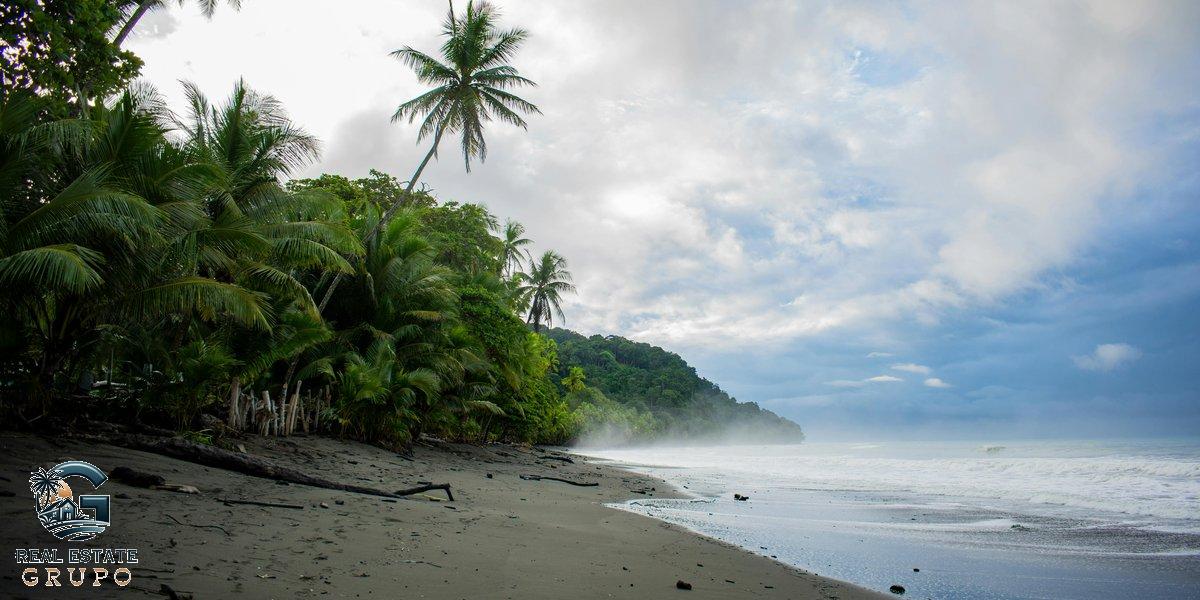
Your daily life in Santa Teresa revolves around the main road. Morning surf, coffee, co-working, lunch, afternoon surf or yoga, dinner out with friends you’ve met at the break. It sounds like a cliche because that’s genuinely how people structure their days there. The community is real and the social calendar is full if you want it to be. The flip side is that during high season, the road gets congested, the restaurants fill up, and you’re sharing your beach with a lot of people.
Mal Pais moves slower. You’ll likely drive to most things. A morning walk to the beach is still beautiful but the beach is typically less crowded. Neighbors are more spread out. If you’re the type who wants space, silence, and the sound of howler monkeys over your morning coffee, Mal Pais is more aligned with that picture. Families with kids often prefer Mal Pais for the same reasons: less traffic, more room, fewer crowds at the beach.
One thing both areas share is road quality challenges. The Nicoya Peninsula as a whole requires a 4×4 vehicle during rainy season (May through November), and certain side roads in Mal Pais in particular can become genuinely difficult. That’s not a dealbreaker, but factor a proper vehicle into your budget if you haven’t already.
Mal Pais vs Santa Teresa: Which Is Better for Short-Term Rentals?
Santa Teresa wins this specific category. The combination of name recognition, consistent surf, walkability, and strong existing tourism infrastructure gives properties there a competitive advantage in the short-term rental market. Platforms like Airbnb and VRBO show strong listing density in Santa Teresa, which means guests already know to search there. A well-positioned Santa Teresa property can command solid nightly rates during high season, particularly properties within walking distance of the main strip or the beach.
Mal Pais can absolutely generate rental income, especially for higher-end private villas where seclusion is the selling point. Guests who want a quiet retreat with a private pool and a chef are happy to book there. The market is just thinner and more dependent on premium positioning. Don’t buy in Mal Pais expecting it to perform like a Santa Teresa rental without significant investment in amenities and marketing.
| Category | Santa Teresa | Mal Pais |
|---|---|---|
| Vibe | Social, surf town, active | Quiet, secluded, nature-forward |
| Development density | Higher, walkable core | Lower, spread out lots |
| Short-term rental demand | Stronger, broader market | Niche, premium positioning |
| Lot sizes | Smaller, higher per-m² price | Larger, comparatively lower entry |
| Amenities | Restaurants, shops, surf schools | Limited but growing |
| Road access | Manageable 4×4 most of year | Rougher, more 4×4 dependent |
| Who buys here | Investors, nomads, surf lovers | Families, privacy seekers, lifestyle buyers |
What Do You Need to Know Before Buying in Either Area?
The single biggest mistake buyers make in both Santa Teresa and Mal Pais is not verifying title early enough. The coastal nature of these communities means a meaningful share of properties sit in the Maritime Zone, governed by Costa Rica’s Maritime Zone Law (Ley de la Zona Maritimo Terrestre). In that zone, the first 50 meters from the high-tide line is public property, full stop. The next 150 meters is concession land that can be leased from the local municipality (municipalidad), but never privately owned. Many buyers don’t realize they’re buying a concession, not a fee-simple title, until they’re deep into due diligence.
Concession properties aren’t necessarily bad investments, but the rules are different. You need a concession in good standing with the municipality, you need to verify that a concession hasn’t lapsed, and foreign buyers can only hold a concession through a Costa Rican corporation (sociedad anonima) or with a Costa Rican co-owner. Work with a qualified Costa Rican real estate attorney before signing anything. You can also start by checking public registry records directly through the Registro Nacional.
Beyond title, think about utilities. Water and electricity access in parts of Mal Pais can be less reliable than in Santa Teresa’s more established core. That’s improving, but it’s worth asking sellers directly about water source (well, municipal, or ASADA cooperative), electrical connection status, and whether high-speed internet has been run to the specific property. We’ve seen buyers close on land that looked great on paper but required tens of thousands of dollars in utility infrastructure before building could start.
You’ll also want to check whether your desired property requires an environmental viability permit (viabilidad ambiental) from SETENA before construction. Projects above a certain size or in sensitive zones must get this permit, and it adds time and cost to any development plan. Ask about it early, not after you’ve closed.
If you want to browse current listings in both areas, you’ll get a real sense of what’s available and at what price points before committing to a specific zone. And if you have questions about a specific property or want a local read on a particular street or lot, reach out to our team directly.
Frequently Asked Questions
Are Mal Pais and Santa Teresa the same place?
They’re distinct villages on the same coastal road at the southern tip of the Nicoya Peninsula. Carmen is the central junction; Santa Teresa extends north from there, and Mal Pais extends south toward Cabo Blanco. Locals treat them as separate communities even though the road connects them without a clear physical border.
Is Santa Teresa safe for foreign buyers?
Santa Teresa and Mal Pais are both considered relatively safe compared to Costa Rica’s urban centers. Like anywhere, common-sense security applies: secure your home, don’t leave valuables visible in vehicles, and invest in good locks. Property crime is the most common issue. The expat community in Santa Teresa is active and well-connected, which helps with local knowledge about safety.
Can Americans or Canadians own property in Santa Teresa or Mal Pais?
Yes. Costa Rica allows foreigners to own titled (fee-simple) property under the same rights as citizens. Concession land near the beach has additional restrictions for non-residents. As long as you work with a qualified Costa Rican attorney and verify title properly, there are no restrictions on foreign ownership of fee-simple property in either area.
How do you get to Santa Teresa and Mal Pais?
Most buyers fly into San Jose (Juan Santamaria International Airport) or Liberia, then drive to Paquera to take the car ferry across the Gulf of Nicoya. From Paquera it’s roughly an hour’s drive to Santa Teresa via Cobano on roads that range from paved to unpaved. Small regional flights to Tambor are also an option for those without a vehicle. A 4×4 vehicle is strongly recommended year-round and effectively required during rainy season.
What’s the price difference between Mal Pais and Santa Teresa?
Prices in both areas depend heavily on proximity to the beach, lot size, title type, and existing structures. Broadly speaking, Santa Teresa’s commercial core tends to carry higher per-square-meter prices than Mal Pais, reflecting stronger rental demand and walkability. Mal Pais can offer more land for less money, though premium oceanview lots command serious prices in both areas. Get current listing data to compare real numbers rather than relying on general estimates that go stale quickly.
See current listings in Santa Teresa or message Leo directly on WhatsApp at +506 8798 6122.
Browse current Costa Rica listings
These are properties we are working with right now. New ones get added often, so check back, or message us for off-market options that never hit the public site.

5 bedrooms / 5 bathrooms
Puntarenas Province, Santa Teresa, Costa Rica
CASA CEDRO | MAL PAIS
Puntarenas Province, Santa Teresa, Costa Rica
San Isidro Cóbano
Puntarenas Province, Santa Teresa, Costa Rica
Beachfront Villa in Playa Mal País
Puntarenas Province, Santa Teresa, Costa Rica
heart of Santa Teresa
Puntarenas Province, Santa Teresa, Costa Rica
Rare $400k Central Santa Teresa
Puntarenas Province, Santa Teresa, Costa RicaOn the ground in Costa Rica, helping US and Canadian buyers find and safely close the right property. Questions? Message Leo on WhatsApp at +506 8798 6122.


Join The Discussion