 English
 Español
 Français
 עברית
עברית Português

Mal País is the quiet southern tip of the Santa Teresa peninsula — a working fishing village seven minutes south of Playa Carmen, where Cabo Blanco Absolute Nature Reserve forms a permanent green buffer at the end of the road. For buyers researching Mal País real estate, that geography is the entire investment thesis: the fishing-village character isn’t a marketing line, it’s the daily reality, and Cabo Blanco’s protected status means the southern flank can never be over-developed.
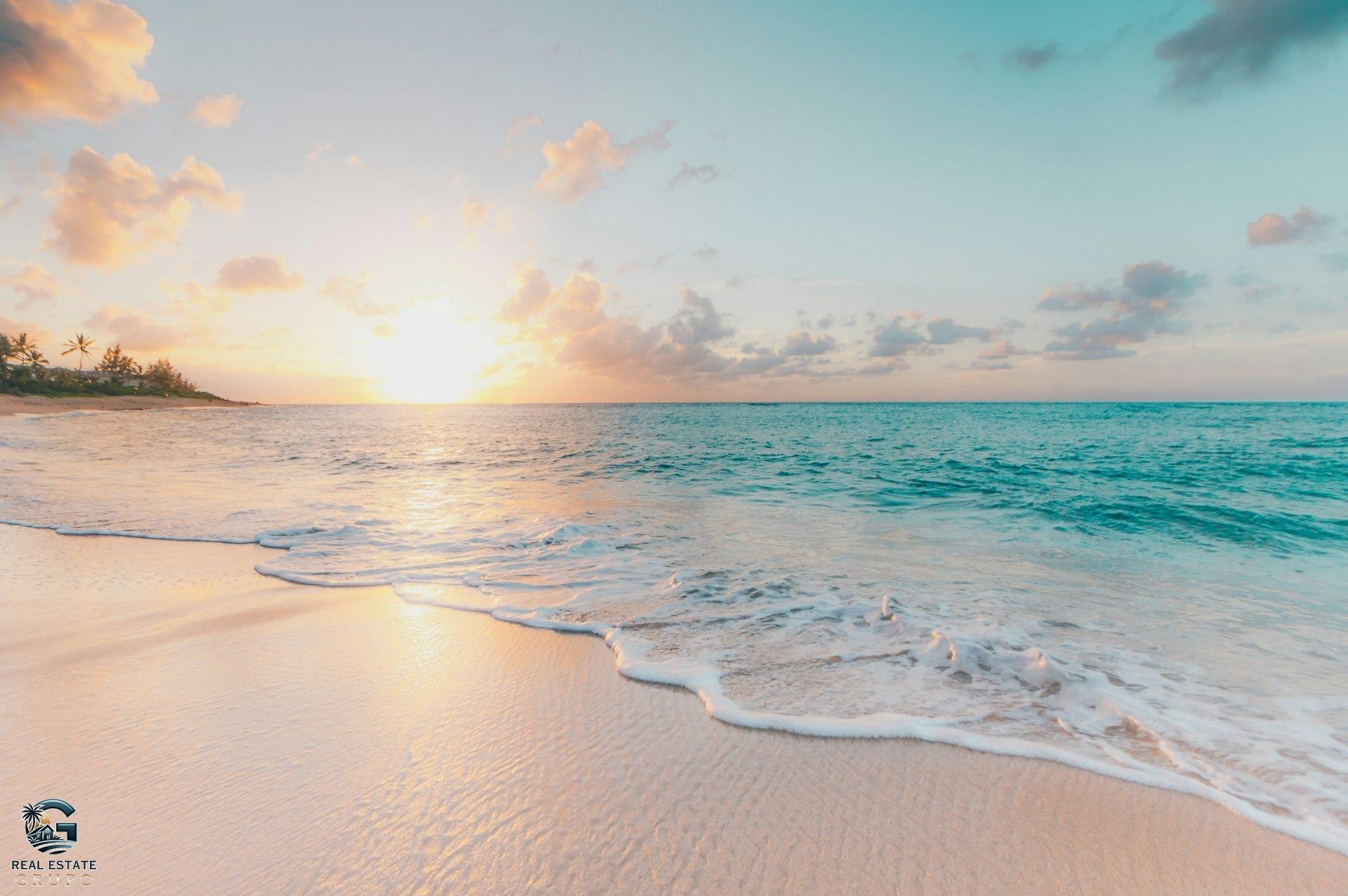
This is the slowest, most private corner of the peninsula. Local fishermen still bring in the day’s catch and sell it directly to restaurants and private chefs. Lots are bigger and prices per square metre lower than equivalent product in Carmen or Hermosa, and the buyer profile skews older, lifestyle-driven, and less yield-focused — people who have bought elsewhere on the peninsula already and have decided what they actually value.
This guide walks through what’s for sale in Mal País right now, what daily life looks like, who tends to buy here, and the math behind the area’s investment case. Mal País rewards patience and a clear thesis. By the end you’ll know whether it fits.
Why Mal País is the peninsula’s quiet southern edge
There are several distinct micro-markets across the Santa Teresa peninsula. Mal País is the southernmost — and the only one with a permanent natural buffer at its border.
The Cabo Blanco moat. Mal País ends at the entrance to Cabo Blanco Absolute Nature Reserve — Costa Rica’s oldest protected area, established in 1963 and effectively untouchable. That buffer is the structural reason Mal País is quieter than Hermosa and the structural reason raw acreage here has held value as a long-horizon land play. The southern flank cannot be over-developed; expansion only pushes the boundary so far before it hits the reserve. Buyers who understand the geography understand why Mal País lots have appreciated steadily even when peripheral inventory hasn’t.
Fishing village character, intact. Mal País is not a former fishing village. It is an actual one. Local fishermen still bring in the day’s catch each morning and sell it directly to restaurants, hotels, and private chefs. The single road into the village winds past tile-roof houses, a small commercial cluster, and a working dock. That character matters to a specific buyer profile — older, lifestyle-driven, less yield-focused — and it sets the daily rhythm of the area in a way that doesn’t sand off into a generic “quiet beach town.”
Bigger lots, lower prices per square metre. Mal País land typically runs 20–30% cheaper per m² than equivalent Carmen lots. Larger parcels (1–5 acres) are common in the inland and hillside zones, ideal for compounds, retreats, or future subdivisions. The trade-off is location — you’re south of the main commercial gravity — but for the right buyer that’s the feature, not the cost.
The expansion play. As Santa Teresa fills up, both buyers and developers move south. Mal País has been in the middle of a multi-year growth cycle — small hotels, restaurants, and remote-work residents have all increased materially over the past several years — and the trajectory has held even through rate cycles that affected speculative markets elsewhere.
Owner-operator boutique hotel angle, real but selective. Mal País has hosted a wave of small hospitality projects in recent years — boutique hotels, retreats, restaurants. The successful ones share two things: a location near the village core where the limited foot traffic concentrates, and operators who understand they’re serving a specific traveler — slower-paced, longer-stay, less impulse — and don’t try to import Carmen’s high-volume rhythm. The angle is real, but it rewards a clear concept and operator experience. Generic “add a hotel and they will come” projects tend to struggle here.
A day in Mal País — what life actually looks like
Mal País mornings start at the working dock. By 7am the small fleet is back in with the night’s catch — snapper, dorado, tuna, sometimes lobster — and the restaurants and hotels send their cooks down to choose. That fish-to-plate rhythm sets the food culture for the whole village; the seafood served at Mal País restaurants tonight was very likely caught this morning.
Mid-morning is quieter than anywhere on the peninsula. There’s no commercial strip to walk to, no row of cafés with WiFi-tethered remote workers. Most residents either work from home or drive five to seven minutes north to Carmen for coffee meetings, supplies, or a coworking session. By the time the day warms up, the village has settled into its rhythm — beach, hilltop terrace, hammock, or up the road for an errand.
Afternoons split between beach and Cabo Blanco. Several of the trail heads into the reserve sit at the southern end of the village, and the more serious hikers in the area treat the reserve as their daily walk. The beach itself is rockier here than the long sand stretches of Hermosa, with tide pools and surf breaks at specific spots, but it’s nearly always empty.
Sunset is universal. Mal País’s western coast catches the same Pacific drop as the rest of the peninsula, and the cliffs and points create vantage points you don’t get on Hermosa’s flat shoreline. A handful of restaurants on the bluffs make this the area’s signature evening — a slower, lower-volume version of the sunset crowd.
Nightlife is minimal by design. There are good restaurants and a few bars, but no clubs and no late-night strip. By 10pm the village is quiet and the road is empty. Buyers who came to Mal País specifically because they were tired of Carmen’s rhythm appreciate this every single night.
Who buys property in Mal País
Three buyer profiles dominate Mal País’s transaction volume.
Privacy-focused lifestyle buyers, often older. This is the largest single profile. Buyers in this segment have usually visited the peninsula multiple times before deciding, often have a primary home elsewhere, and are buying Mal País for a specific reason — peace, larger acreage, a writing retreat, a creative studio, or a slower stage of life. They tend to pay cash, hold long, and don’t price-shop.
Long-horizon land investors. Mal País is one of the better long-horizon land plays on the peninsula because of the Cabo Blanco buffer: supply is structurally limited, and the southward expansion of demand keeps pushing toward the reserve boundary. Buyers in this segment typically pick larger parcels (2–5 acres), hold for 5–10 years, and either sell raw or subdivide. The math has worked, but holding-cost discipline matters — this isn’t a flip market.
Owner-operators of boutique hospitality. Real but selective — successful projects are operator-led and built around the area’s slower traveler.
If you’re a yield-focused short-term rental investor without a concept-led operating angle, Carmen or Hermosa is your fit. If you want even cheaper per-m² land further south, Manzanillo or Cabuya sits beyond Mal País.
What you can buy — Mal País property types and price bands
Mal País inventory splits into three rough categories. The bands below reflect typical ranges of what’s been moving.
- Hilltop ocean-view villas — 3–5 bedrooms with pools and significant ocean exposure — $700K – $2M
- Larger raw-land parcels — 1–5+ acres, hillside and inland — $300K – $1.5M
- Boutique hotels and small retreats — operating businesses with real revenue — $1M – $3M
Typical Mal País price band: $500K – $2M. Owner-financed property is available on a meaningful share of our Mal País inventory — usually structured at 30–50% down with a one- to three-year balloon. That widens the buyer pool but also means seller-side due diligence matters as much as property due diligence; we walk every buyer through the standard checklist.
Two specific Mal País nuances. First, hillside parcels often have their own water source — a private well, ASADA service, or both — and the build process for raw land typically requires SETENA environmental clearance before construction can begin (typically adds 60–90 days to the timeline). Second, village-core commercial inventory is genuinely scarce; if you’re hunting an operating boutique hotel near the central commercial cluster, those listings turn over rarely and warrant moving fast when they do.
If your budget is under $300K and you want raw land in this part of the peninsula, Manzanillo or Cabuya further south offers more acreage at lower price points. Mal País is the inflection point above which committed capital starts to make sense.
Drive times and access from Mal País
Mal País sits at the southern end of the peninsula. From the village core:
- 0–3 minutes to the rocky coast, depending on which block
- 5–7 minutes north to Carmen restaurants and the only full-size supermarket
- 12–15 minutes north to Hermosa
- 25–30 minutes south to Manzanillo and Cabuya
- 5–10 minutes to the Cabo Blanco Reserve trail head, depending on the lot
- 50–55 minutes to Tambor airport (regional flights)
- 90–120 minutes to the Paquera ferry, which connects to Puntarenas on the mainland
Most international guests fly to Liberia (LIR) or San José (SJO), then drive in (4–5 hours), take a small charter to Tambor, or arrange a private transfer. Mal País’s hillside roads are steeper than Hermosa’s; 4WD is recommended for most properties up the slopes, especially in rainy season.
The Mal País real estate investment outlook
The investment case for Mal País rests on three things, and the structural moat behind all of them is Cabo Blanco.
Long-horizon land appreciation under a hard supply ceiling. The Cabo Blanco Absolute Nature Reserve forms a permanent boundary at the southern end of Mal País. The land south of that boundary is protected and cannot be developed, which means as Santa Teresa’s southern expansion continues, supply within Mal País proper compresses — there’s no other direction to expand. We’ve watched buildable hilltop lots move from the $300K range several years ago into the $500K–$700K range today on the deals we’ve handled. Actual figures vary heavily by view and access, so treat that as a starting point, not a benchmark.
Cash yield from short-term rentals — lower than Carmen, steadier operating profile. On the homes we manage in Mal País, well-positioned hilltop villas typically run in the 50–65% occupancy range across the year, with a renter profile that leans long-stay (one- to two-week families, retreats, remote-work professionals). Average daily rates are lower than Carmen on a per-night basis, but the operating profile is cleaner — fewer turnovers, less wear-and-tear, and a renter who tends to be more respectful of the property. We typically see net cap rates in the 3–5% range on the deals we underwrite in the $700K–$1M band. The unit-level math varies a lot, so treat that as a starting point, not a benchmark.
Boutique hospitality upside — selective. Mal País has hosted a wave of small hotels, retreats, and concept-led restaurants in recent years. The successful ones are operator-led and built for the area’s slower traveler. There’s runway for more, but it rewards a clear thesis, not generic add-a-hotel investing.
The risks to watch. Hillside-road access in rainy season (May–November) — confirm road condition before closing on any inland parcel. Regulatory tightening around short-term rentals (Costa Rica’s framework requires ICT registration plus a Cobano municipal patente — both currently routine, but worth tracking). And holding-cost discipline if you’re buying raw land for the long-horizon thesis — taxes are low, but unmaintained land in the tropics deteriorates.
For the broader regional context, our complete 2026 Santa Teresa buyer’s guide covers the peninsula-wide fundamentals.
Want to see what’s actually for sale in Mal País right now? Call or WhatsApp us — happy to send a curated shortlist.
Buying property in Mal País Costa Rica — how it works
Costa Rica is one of the most foreigner-friendly jurisdictions in Latin America for property ownership. The fundamentals are the same as anywhere else on the peninsula. Three things specific to Mal País worth knowing.
Foreign ownership is straightforward. Foreigners can hold freehold title to most Mal País properties on the same terms as Costa Rican citizens. The exception is concession land within the Zona Marítimo Terrestre — the inner 50 metres is public, the outer 150 metres is concession-only. Most Mal País villa inventory sits inland of the public zone as freehold title, but always verify on the specific property. The Registro Nacional de Costa Rica makes title verification public and transparent.
Standard transaction structure. Most Mal País sales close through a Costa Rican S.A. (corporation) for tax and inheritance reasons. The buyer hires an attorney (typically 1.25%–1.5% of purchase price), pays transfer tax (1.5%), and registers the deed at Registro Nacional. Closings run 30–60 days from a signed promise-of-sale, depending on financing.
Short-term rental compliance. Operating an STR in Mal País requires registration with the Instituto Costarricense de Turismo (ICT) and a municipal patente from the Cobano canton authority. Both are routinely granted to compliant properties.
Mal País-specific note. Build timelines on hillside lots run longer than in flatter neighbourhoods — SETENA review adds 60–90 days, topography requires engineering for drainage, and seasonal road access affects construction cycles. Budget accordingly.
Live properties for sale in Mal País
A snapshot of current inventory we’re tracking. Call or WhatsApp for the full shortlist plus off-market opportunities.
- Beachside Home in Mal País
- Prime Luxury Ocean View Home in Mal País
- Spectacular Ocean View Lot in Mal País
- Serene Lot in Mal País
Browse all Santa Teresa listings →
Buyer FAQ
How far is Mal País from Santa Teresa?
Mal País is 5–7 minutes south of Playa Carmen by car — same road, no traffic, easy drive. You can be at a Carmen restaurant or the only full-size supermarket on the peninsula in 10 minutes door-to-door. The “remote” perception is mostly outdated; from a daily-life standpoint, Mal País has the same access to peninsula amenities as Hermosa does.
Is Mal País a good real estate investment?
For long-horizon land bankers and lifestyle buyers, yes — the Cabo Blanco buffer creates a structural supply ceiling, and prices have appreciated steadily over the past decade. For short-term yield-focused investors, Mal País is less attractive than Carmen because rental yields and average daily rates run lower. Match the asset to the strategy.
Can I live full-time in Mal País?
Yes — Mal País has a real resident community (fishing families, expat retirees, remote-work professionals, hospitality operators) and supports full-time living. The trade-offs versus Hermosa are practical: smaller daily-supply markets in the village (most residents drive into Carmen for the weekly grocery run), fewer school options, and a more committed approach to lifestyle. If you want a full-time residence with maximum quiet, Mal País delivers; if you want walkable convenience, Carmen does.
Ready to see Mal País in person?
We run property tours from our Santa Teresa office — see your shortlist in context, with sunset exposure, road access, and neighbours all checked. We send a short pre-tour briefing on the specific listings you’re interested in, so you spend the day comparing trade-offs, not learning basics.
Call +506 8798 6122 · WhatsApp Leo


Join The Discussion