 English
 Español
 Français
 עברית
עברית Português

Manzanillo and Cabuya are the two villages at the southern edge of the Santa Teresa peninsula — beyond Mal País, on either side of the Cabo Blanco Absolute Nature Reserve. This is the long-horizon land-banking end of the peninsula. Buyers come here for raw acreage in the path of the southward expansion of demand, with a permanent natural buffer at the boundary that means the supply ceiling is genuinely hard.
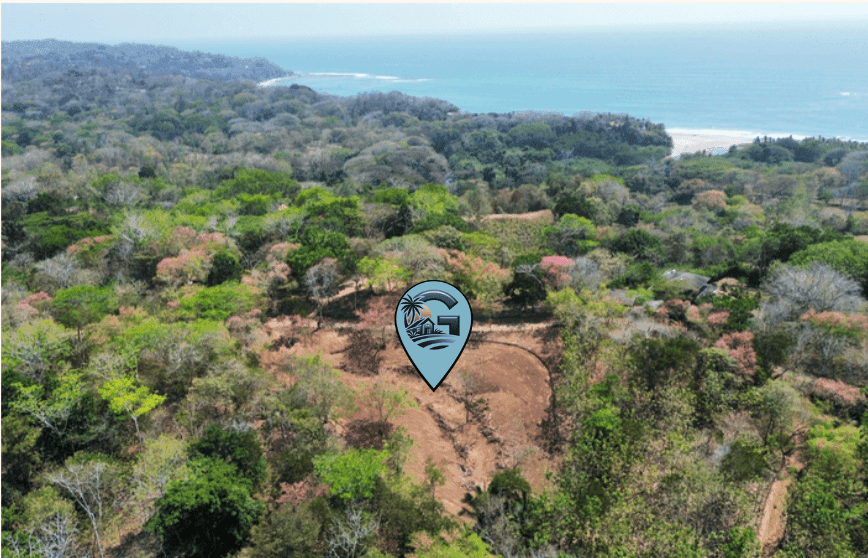
This is not a cash-yield post and it isn’t really a lifestyle post either. Manzanillo Cabuya real estate works for one specific buyer profile: someone who can hold raw land for 5–10 years, doesn’t need monthly rental income, and understands the area is structurally underdeveloped by design. If you want a finished home with rental cash flow or walkable beach amenities, Carmen, Hermosa, or even Mal País fits better.
A note on inventory before we go further. Live property inventory tagged specifically to Manzanillo or Cabuya is genuinely thin right now. We have one truly area-tagged listing — Manzanillo Hills Land — and we round out the section with two nearby southern-edge Mal País lots that share the same long-horizon thesis. We name this directly because buyers in this segment respect the honesty, and pretending the inventory is deeper than it is would damage credibility.
This guide walks through what Manzanillo and Cabuya actually are, how they differ from each other, what life looks like at the edge of the peninsula, and the math behind the land-banking thesis. We’ll be specific about infrastructure — what’s there, what isn’t, what you’ll need to verify on the specific lot.
Why Manzanillo and Cabuya — the long-horizon land thesis
There are several distinct micro-markets across the Santa Teresa peninsula. Manzanillo and Cabuya share the structural defining feature: they sit at the actual edge of the Cabo Blanco Absolute Nature Reserve.
The Cabo Blanco supply ceiling is hard here. Mal País is near the reserve. Manzanillo and Cabuya are at the reserve. The protected zone forms a permanent boundary — Costa Rica’s oldest reserve, established in 1963, untouchable by development. There is no expansion past this line. As demand keeps pushing south on the peninsula, supply within these two villages compresses against the actual reserve boundary. That’s the structural reason long-horizon land here has appreciated even when peripheral inventory hasn’t.
The cheapest m² on the peninsula. Land at this end of the peninsula is the most affordable in the whole Santa Teresa–Mal País–Cabuya corridor. $150K can still buy a meaningful, buildable parcel with ocean view or jungle privacy. $300K buys 1–3 acres with significant flexibility. The trade-off is what comes with the price: lower infrastructure density, longer drives to amenities, less developed services.
The expansion-path thesis. The clearest investment story here is positional. Santa Teresa has been expanding south for over a decade — Carmen filled in, then Hermosa, then Mal País gained density. Manzanillo and Cabuya are the next phase. Buyers who position now into the expansion path are buying ahead of the curve. The thesis requires patience — five to ten years is the realistic horizon — but the geography and demographics are clear.
Less infrastructure, by design. This is not Carmen with cheaper prices. It’s a structurally different product. The villages are smaller, the roads are mostly unpaved, the commercial cluster is minimal, and basic services are less developed than further north. The right buyer sees that as a feature — the conservation buffer is what protects the value over time.
Manzanillo vs. Cabuya — they’re not the same place
The two villages share the southern-tip framing but they are not the same place. Treat them as related-but-distinct sub-areas inside one investment thesis.
Manzanillo sits at the southeast corner of the peninsula — south of Mal País along the road that wraps around the tip. It is on the gulf-influenced southern side, with rocky coastline, occasional surf breaks, and a few small restaurants. The road in is rough but driveable. Character is “southern Mal País without the village core” — quiet, hilly, slightly more accessible from Mal País and Carmen amenities.
Cabuya sits south of the Cabo Blanco reserve, on the gulf side of the peninsula’s tip. The drive in passes through the reserve area itself. The village has a tiny commercial cluster — a couple of restaurants, a small market — and the famous “island cemetery” off the gulf side that defines the area’s identity. Cabuya is what people picture when they imagine the remote Costa Rican fishing village — except the fishing has tapered and most residents are now expats and Tico families with deep roots.
Practical difference for buyers. Manzanillo lots typically cost slightly less than Cabuya lots of equivalent size — Cabuya has the marginally more developed village core. Both are subject to the same Cabo Blanco supply ceiling.
Who buys property in Manzanillo and Cabuya
Three buyer profiles dominate transactions at this end of the peninsula.
Long-horizon land investors. The dominant profile by a wide margin. Buyers who pick a 1–3 acre parcel for under $300K, hold for five to ten years while the southward expansion fills in, and either sell raw or subdivide. The math has worked over the past decade on the deals we’ve handled, but holding-cost discipline matters — taxes are low, but unmaintained land in the tropics deteriorates.
Off-grid and remote-living buyers. A small but real segment. Older retirees, off-grid enthusiasts, writers and artists who want maximum remoteness without giving up Pacific access. They accept the infrastructure trade-offs and live in a setting too quiet for most other peninsula buyers.
Conservation-minded buyers. Buyers who value the proximity to Cabo Blanco itself. Some are genuinely conservation-focused (researchers, naturalists, sustainability-minded developers); others just want the buffer. Either way, the reserve adjacency is part of what they’re buying.
A clear note for first-time investors. This is not a starter market. If this is your first Costa Rica purchase or your first Santa Teresa purchase, we typically steer buyers toward North Santa Teresa or Mal País first. The complexities here — infrastructure verification, road access, water source, long-horizon holding cost, lower liquidity — reward buyers who already know Costa Rica or who are working with a broker they trust through the due-diligence process.
What you can buy — Manzanillo & Cabuya property types and price bands
Inventory at this end of the peninsula is heavily weighted toward raw land. The bands below reflect typical ranges — actual prices vary heavily by acreage, view, ocean proximity, and road access.
- Raw land (1–5 acres) — buildable parcels with view, jungle, or ocean potential — $80K – $400K
- Existing rustic homes and smallholdings — owner-built over the years, varying quality — $200K – $500K
- Larger development parcels — 2+ hectares with subdivision potential — $400K – $700K
- Cabuya village-cluster lots — small footprint near the village commercial core — $200K – $400K
Typical price band: $150K – $700K. Owner-financed property is available on a meaningful share of inventory in this area, often more flexibly than further north because sellers tend to be longer-term holders without urgency.
Three things to verify on every Manzanillo or Cabuya purchase.
Water source. Many lots have private wells, ASADA service, or both. Verify the chain of title to the water source and the reliability of service before closing.
Road access in both seasons. Roads here are mostly unpaved and the rainy season (May–November) makes 4WD access genuinely necessary in many areas. Visit during dry season and during rainy season if you can.
Title and acreage history. Larger raw parcels occasionally have subdivision-history complexity, easements, or boundary uncertainty worth a careful attorney review.
Infrastructure: what’s there and what isn’t
Infrastructure here is a real consideration, not an afterthought. Buyers in Carmen and Hermosa take it for granted; in Manzanillo and Cabuya you verify it on the specific lot.
Water (ASADA + private wells). Both villages have ASADA water cooperatives covering the core of each settlement, but coverage gets thinner moving outward. Many lots have or need a private well. Both options work; both require verification of capacity, potability, and chain of title.
Electricity (ICE). ICE is Costa Rica’s national utility. Service is extended through both villages and most areas with established roads. Fringe lots may require an extension fee or a private connection — verify before closing.
Internet. Fiber is reaching the region but coverage is uneven. Some lots are well-served; others rely on cellular fallback. If your work depends on connectivity, this is a load-bearing question — confirm with ICE or test on-site during a property visit.
Roads. Mostly unpaved. The main artery roads through the villages are graded gravel and passable in dry season for any vehicle, but many residential branches and most hillside parcels require 4WD year-round. Rainy season changes which lots are realistically accessible.
Services. Cabuya has a small commercial cluster — a couple of restaurants, a small market, basic services. Manzanillo is even thinner. The full-size supermarket is in Carmen, 25–30 minutes away. International schools, hospitals, gyms — all in Carmen or further. This isn’t a dense lifestyle market, by structural design.
Drive times and access
Manzanillo and Cabuya sit at the southern edge of the peninsula. From either village core:
- 12–20 minutes north to Mal País (Manzanillo) or via the reserve perimeter road (Cabuya)
- 25–30 minutes north to Carmen restaurants, supermarket, and amenities
- 50–55 minutes to Tambor airport (regional flights)
- 90–120 minutes to the Paquera ferry, which connects to Puntarenas on the mainland
Most international guests fly to Liberia (LIR) or San José (SJO), then drive in (4–5 hours), take a small charter to Tambor, or arrange a private transfer. Allow extra time for the final leg into either village — road condition is the controlling factor.
The Manzanillo Cabuya real estate investment outlook
The investment case for Manzanillo and Cabuya is essentially one thesis with two sub-applications.
Long-horizon land appreciation under a hard supply ceiling. The Cabo Blanco Absolute Nature Reserve forms a permanent boundary that cannot be developed. As Santa Teresa’s southward expansion continues, supply within Manzanillo and Cabuya compresses against the actual reserve edge. We’ve watched buildable raw-land lots in this area move steadily upward over the past decade on the deals we’ve handled — actual figures vary heavily by parcel, so treat any specific number as a starting point, not a benchmark. The thesis requires patience: five to ten years is realistic, not eighteen months.
A clear note on cash yield: there isn’t one we can responsibly attribute. We don’t currently manage short-term rentals in Manzanillo or Cabuya. The few owners renting here typically run their own bookings or use a Mal País-based manager. We won’t fabricate occupancy or cap-rate ranges for areas where we don’t have managed inventory; honesty over filler. If cash yield is your primary thesis, this is the wrong area.
Holding-cost discipline matters. Property tax rates are low (typically 0.25% of declared value), but unmaintained land in the tropics deteriorates and erodes the parcel’s optionality. Plan for periodic clearing, perimeter maintenance, and someone visiting periodically.
Risks to watch. Liquidity — exits here are slower than Carmen or Hermosa, fine if you’ve planned for it. Infrastructure changes that reshape value. And the same regulatory and currency exposures every Costa Rica investor faces.
For the broader regional context, our complete 2026 Santa Teresa buyer’s guide covers the peninsula-wide fundamentals.
Buying property in Manzanillo or Cabuya Costa Rica — how it works
Costa Rica is one of the most foreigner-friendly jurisdictions in Latin America for property ownership. The fundamentals are the same as anywhere else on the peninsula. Three things specific to this area worth knowing.
Foreign ownership is straightforward. Foreigners can hold freehold title to most properties on the same terms as Costa Rican citizens. Most inventory here is freehold and inland of the Zona Marítimo Terrestre concession zone, but always verify the specific parcel during due diligence. The Registro Nacional de Costa Rica makes title verification public and transparent.
Standard transaction structure. Most sales close through a Costa Rican S.A. (corporation) for tax and inheritance reasons. The buyer hires an attorney (typically 1.25%–1.5% of purchase price), pays transfer tax (1.5%), and registers the deed at Registro Nacional. Closings run 30–60 days from a signed promise-of-sale.
Short-term rental compliance, if relevant. Standard ICT registration plus a Cobano municipal patente are the formal requirements, but the practical reality here is that very few owners run STRs at all. Discuss with your attorney during due diligence if it’s part of your plan.
Want to see what’s actually for sale in Manzanillo or Cabuya right now? Call or WhatsApp us — happy to send a curated shortlist.
Live properties for sale in Manzanillo, Cabuya, and the southern peninsula edge
Live property inventory tagged specifically to Manzanillo or Cabuya is thin right now. We have one truly area-tagged listing and round out the section with two nearby southern-edge Mal País lots that share the same long-horizon thesis. We name this directly because buyers in this segment respect the honesty.
- Manzanillo Hills Land for Sale — Manzanillo, area-tagged
- Spectacular Ocean View Lot in Mal País — nearby southern edge
- Serene Lot in Mal País — nearby southern edge
Browse all Santa Teresa listings →
We’re tracking other off-market parcels in both villages — call or WhatsApp if you’d like a current off-market list.
Buyer FAQ
Is there electricity and water in Cabuya?
Most areas yes — ASADA water service and ICE electricity have been extended through the village core and most established roads. Some fringe lots still rely on private wells or off-grid solutions. Confirm per-lot, especially for more remote parcels — drilling a well or extending service has a known cost and timeline that should factor into your offer.
Should I buy in Cabuya as a first-time investor?
Probably not. Manzanillo and Cabuya are not starter markets — they’re for buyers who already know Costa Rica or who are working with a broker they trust through the due-diligence process. The complexities (infrastructure verification, road access, water source, long-horizon holding cost, lower liquidity) reward experience. First-time Santa Teresa buyers are usually better served by North Santa Teresa or Carmen, where the rental and appreciation curves are clearer and the support infrastructure is dense.
How developed is Manzanillo Costa Rica today?
Manzanillo is the more remote of the two villages — a handful of restaurants, surf hotels, and residences, but no commercial centre, no supermarket, no full lifestyle infrastructure. Most residents drive into Carmen for the weekly grocery run (25–30 minutes). The trajectory is gradual development tracking Santa Teresa’s southward expansion, but it’s slow by design — the conservation buffer keeps it that way.
Ready to see Manzanillo or Cabuya in person?
We run property tours from our Santa Teresa office — see your shortlist in context, with road access in both seasons, water source, and infrastructure all verified. We send a short pre-tour briefing on the specific listings you’re interested in, so you spend the day comparing trade-offs, not learning basics.
Call +506 8798 6122 · WhatsApp Leo


Join The Discussion