 English
 Español
 Français
 עברית
 Português


To check property Santa Teresa buyers need to verify four things before any money moves: who legally owns the parcel, whether the title is clean of liens or encumbrances, whether the land sits inside the Maritime Zone (zona marítima terrestre), and whether the cadastral map (plano catastrado) matches what the seller is showing you on the ground. Santa Teresa is one of the most in-demand beach corridors in Costa Rica, and that popularity has also made it one of the areas where due diligence mistakes are most expensive. Get these four checks right and you’re buying with confidence. Skip them and you’re gambling.
- Santa Teresa has significant Maritime Zone land. Many parcels are concession rights, not full titled fee-simple ownership.
- Every property has a finca number (registry ID). Start every check there.
- Liens, mortgages, and annotations show up on the Registro Nacional record. A clean visual inspection tells you nothing about these.
- Run a full property check with Folio early, before you negotiate price or sign anything.
What makes Santa Teresa different from other Costa Rica markets?
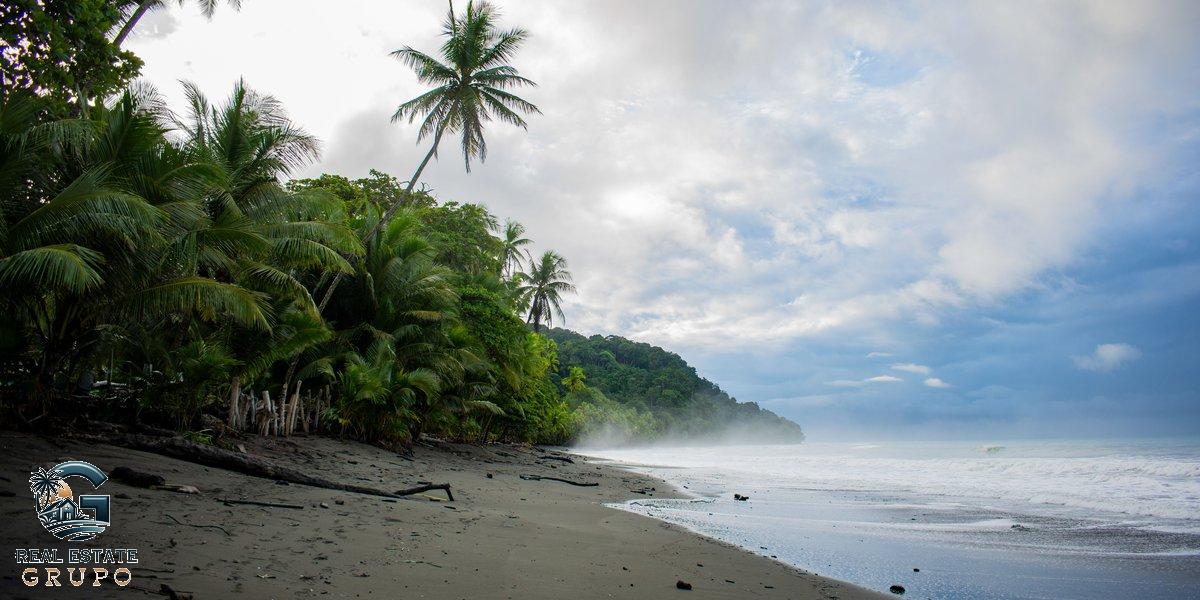
Santa Teresa sits on the southern tip of the Nicoya Peninsula, in Puntarenas province. The road in has improved a lot, but the area is still relatively remote. That remoteness historically meant looser record-keeping, informal boundary agreements between neighbors, and a higher-than-average number of properties where improvements were built without permits.
The coastline is also subject to the Maritime Zone Law (Ley de la Zona Marítima Terrestre). Under that law, the first 50 meters from the high-tide line is public land. Nobody can own it privately. The next 150 meters is the restricted zone, and land there can only be held through a municipal concession, not a standard private title. A surprising number of buyers from the US and Canada discover this fact after they’ve already fallen in love with a beachfront listing.
How do I find the finca number for a Santa Teresa property?
The finca number is your entry point into the Costa Rica property registry system. Think of it like a parcel ID number. Every titled property in Costa Rica has one. It identifies the province (Puntarenas is province 6), the municipality, and the specific parcel record in the Registro Nacional.
Ask the seller or listing agent for the finca number upfront. Any legitimate seller will provide it immediately. If there’s hesitation, that’s a red flag worth noting. Once you have the finca number, you can pull the full registry record, which shows the current registered owner, any mortgages (hipotecas), liens, annotations (anotaciones), and the area of land on record.
How do I check a property in Santa Teresa for Maritime Zone issues?
This is the check most first-time buyers in Santa Teresa skip, and it’s the one that bites hardest. The Maritime Zone (zona marítima terrestre) is governed by municipal authorities in coordination with ICT (Instituto Costarricense de Turismo). The local municipality for Santa Teresa is the Municipality of Cobano. They hold the records on which parcels are under concession and what conditions apply.
A concession is not the same as titled land. With a concession, you’re essentially leasing the right to use the land from the government. Concessions can expire, can be revoked under certain conditions, and cannot be owned by foreigners who hold more than 49% of the concession. That last point is critical for US and Canada buyers. If you’re buying in the restricted zone, you need a Costa Rican partner or a properly structured corporation to hold the majority interest.
Some properties in the Santa Teresa area sit far enough from the beach to be fully titled. Others appear to be titled but have encroachments into the Maritime Zone that weren’t caught when the title was issued. A full property check will flag whether any portion of the registered plano (cadastral map) overlaps with maritime or public land.
What does a property check in Santa Teresa actually involve?
A proper property check covers five layers. Here’s how to think about each one.
| Check | What you’re looking for | Where it lives |
|---|---|---|
| Ownership | Is the seller the legal owner? | Registro Nacional |
| Liens and mortgages | Any debt attached to the land? | Registro Nacional |
| Cadastral map (plano catastrado) | Do boundaries match the ground? | Catastro Nacional |
| Maritime Zone status | Is any portion in the ZMT? | Municipality of Cobano / ICT |
| Tax status (impuesto territorial) | Are property taxes current? | Hacienda / Municipality |
You can pull the first three layers quickly by running a property check on Folio. The free map shows the parcel and its maritime-zone overlap, and the $29 report gives you a clear read on ownership, liens and the registered plano. It’s the fastest way to go from “I like this property” to “here’s what the records actually say.”
What are the most common title problems in Santa Teresa?
The mistake we see most often is buyers trusting a seller-provided title study from the seller’s own attorney. In Costa Rica, the seller typically presents a title report, but you need your own independent attorney to run a separate check. The seller’s report may be outdated or selectively incomplete.
Specific problems that come up frequently in the Santa Teresa / Mal Pais area include: construction on land that technically sits in the public Maritime Zone (the first 50 meters), properties registered under a corporation (sociedad anónima) where the corporate ownership structure is unclear, and boundary disputes with neighbors that never made it into the formal registry record. Informally fenced lots and handshake boundary agreements are common in areas that developed quickly before zoning was formalized.
Liens are another issue. A previous owner might have taken out a mortgage that was never discharged, or a contractor might have placed an annotation on the property for unpaid work. These show up in the Registro Nacional record, but only if you look. A visual walk of the property tells you nothing about a lien sitting in the registry.
How do closing costs and financing factor into buying in Santa Teresa?
Once you’ve confirmed the title is clean, the next question is what the transaction actually costs you. Costa Rica has a transfer tax, stamp duties, and notary fees that buyers share with sellers. The percentages are set by law and don’t vary much, but the total adds up faster than most US buyers expect. Use the closing cost calculator on REG to get a real number before you make an offer, not after.
Seller financing (owner financing) is also more common in Costa Rica than most buyers realize, especially in markets like Santa Teresa where bank financing for foreigners can be difficult. If a seller is open to carrying a note, the owner financing calculator can help you model the terms quickly. And if you’re buying as an investment with plans to rent, run your numbers through the rental ROI calculator before you commit.
Do I need a local attorney to check a property in Santa Teresa?
Yes. Running a property check gives you the data layer fast. But you still need a Costa Rican attorney (abogado) to handle the formal title study, draft the purchase agreement (opción de compra), and execute the transfer deed (escritura pública) before a notary. In Costa Rica, only a licensed notary public can register a property transfer with the Registro Nacional, and notaries here are attorneys with a specific additional credential.
Hire your own attorney. Don’t use the seller’s attorney, and don’t use an attorney that a seller recommends unless you’ve independently verified them. The Costa Rica Bar Association (Colegio de Abogados) is the licensing body. Your attorney should be fluent in Spanish and ideally experienced in Puntarenas province transactions, since local municipal nuances, especially around the Municipality of Cobano and Maritime Zone concessions, matter.
You can browse properties we’ve vetted and see what’s available in the Santa Teresa corridor at REG’s current listings. Our team works with buyers at every stage, from initial search to closing. Reach us at the contact page if you want an introduction to a trusted local attorney or just want to talk through a specific property.
Frequently Asked Questions
Can a foreigner own property in Santa Teresa, Costa Rica?
Yes. Costa Rica’s constitution grants foreigners the same property ownership rights as citizens for titled, fee-simple land. The main exception is Maritime Zone concession land in the restricted zone (50 to 200 meters from the high-tide line), where foreign nationals cannot hold more than 49% of the concession. For fully titled parcels away from the coast, there are no nationality restrictions.
How long does a property title check take in Santa Teresa?
A registry-level data pull through Folio’s $29 report takes up to 24 hours. A full formal title study by an attorney typically takes several business days to a couple of weeks, depending on the complexity of the property’s history and how many ownership transfers it has had. Don’t rush this step to accommodate a seller’s timeline.
What is a plano catastrado and why does it matter?
A plano catastrado is the official cadastral map of the property, registered with Costa Rica’s Catastro Nacional (National Cadastre). It shows the boundaries, area, and shape of the parcel. If the physical fences on the ground don’t match the registered plano, that boundary discrepancy needs to be resolved before you close. In Santa Teresa, where lots were sometimes informally divided or expanded over the years, this mismatch is not rare.
What happens if a Santa Teresa property has a lien on it?
A lien (gravamen) or mortgage (hipoteca) attached to a property travels with the land, not with the seller. If you buy a property with an undisclosed lien, you inherit the debt obligation. This is exactly why you check the registry before you sign or wire anything. If a lien exists, it typically needs to be paid off and formally discharged at or before closing, which should be negotiated into the purchase agreement.
Is the Municipality of Cobano the right authority for Maritime Zone questions in Santa Teresa?
Yes. Santa Teresa and Mal Pais fall within the jurisdiction of the Municipality of Cobano (Municipalidad de Cobano). For concession status, concession fees, and Maritime Zone maps for this area, Cobano is the local authority. The national-level framework is set by the Maritime Zone Law and administered in coordination with ICT, but the local records and concession files sit with Cobano’s municipality.
Before you wire a deposit, check the property first. Run a free scan on Folio. Tap the lot to see its finca number, lot area, boundary and maritime-zone flag in seconds. Folio’s $29 report adds the registered owner, liens and the plano, usually within 24 hours. Then message Leo on WhatsApp at +506 8798 6122 when you are ready to move on a deal.
Browse current Costa Rica listings
These are properties we are working with right now. New ones get added often, so check back, or message us for off-market options that never hit the public site.

5 bedrooms / 5 bathrooms
Puntarenas Province, Santa Teresa, Costa Rica
CASA CEDRO | MAL PAIS
Puntarenas Province, Santa Teresa, Costa Rica
CASA MAREA with $400,000 down
Malpais, Puntarenas Province, Costa Rica
San Isidro Cóbano
Puntarenas Province, Santa Teresa, Costa Rica
Beachfront Villa in Playa Mal País
Puntarenas Province, Santa Teresa, Costa Rica
heart of Santa Teresa
Puntarenas Province, Santa Teresa, Costa RicaOn the ground in Costa Rica, helping US and Canadian buyers find and safely close the right property. Questions? Message Leo on WhatsApp at +506 8798 6122.


Join The Discussion